

Most people don’t picture China as a skydiving destination, which is exactly why the travelers we send come back so fired up about it. The sport is younger here than in Australia or the UAE, but the drop zones that exist are world-class: turbine aircraft, internationally trained instructors, and coastal or mountain scenery you simply can’t get on a standard tandem jump anywhere else. If you’ve ever wanted to fall out of a plane over a tropical island, skydiving in China is more doable — and cheaper — than you’d think. This guide covers the best skydive spots in China, what it costs, and how to book without surprises.
Where to jump: the drop zones that matter
The headline location is Hainan, China’s tropical island, where the main drop zone operates out of Boao (near Qionghai) with beach landings and turquoise-water views on every load. This is the skydiving Hainan guide essentials: a 13,000-foot tandem over the east coast, with the parachute opening above a ribbon of white sand and a jungle-green interior. We’ve had travelers call it the single best hour of a two-week trip. Sanya, an hour south, is the tourist base — pair the jump with beaches using our Hainan 7-day itinerary and the Sanya beach travel guide.
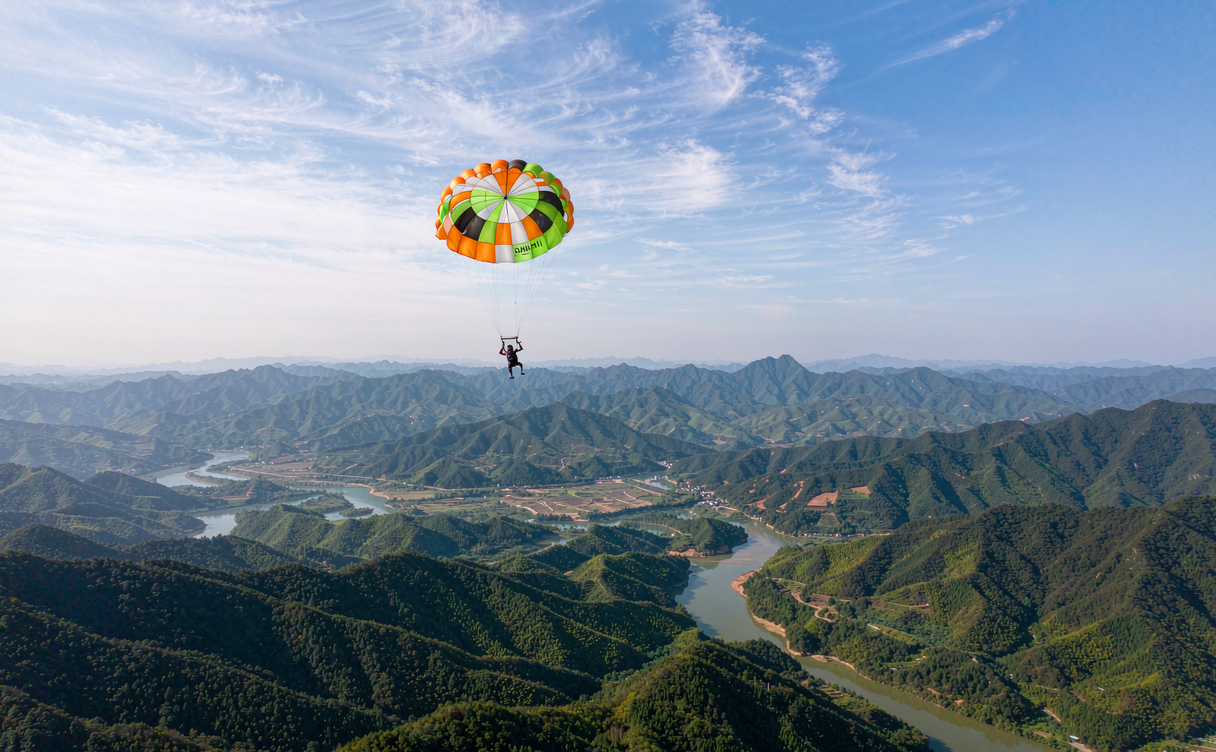
Near Shanghai, a long-running drop zone operates out of Qiandao Lake (Thousand Island Lake) in Zhejiang, about two hours west — a calm-water, forested alternative to the ocean jump, popular with expats. For skydiving near Shanghai, this is the practical choice: train to Hangzhou or Qiandao, then a transfer to the dz. Other zones exist around Beijing and Chengdu for licensed jumpers, but Hainan and Qiandao are the tandem-friendly, tourist-welcoming ones we recommend.
What it costs (and what’s included)
Our China tandem skydive cost breakdown, from bookings in 2024–2025: a tandem jump in Hainan runs about CNY 2,800–3,800 including training, gear, the plane ride, and an edited video/photos package. That’s roughly half the price of a comparable ocean tandem in Australia or Hawaii. Licensed skydivers (A-license and up) can often do hop-and-pops or full-altitude jumps for less with proof of certification. Book directly through the drop zone’s official WeChat or website — third-party resellers add 20–40%.
The sport itself, and the certification bodies behind safe operations, is outlined on Wikipedia’s skydiving page if you want the terminology (exit, freefall, canopy) before you go.
What to expect on the day
A tandem day looks like this: arrive, sign the waiver, do 20–30 minutes of ground training (arch position, signals, landing), ride to altitude in a Caravan or King Air, exit, ~40–60 seconds of freefall at 200+ km/h, then a 5–7 minute canopy ride to landing. Total time on site is 3–4 hours because you wait for your load. In our experience the scariest part is the door; the fall is pure grin. Wear sneakers and a fitted shirt (loose clothing flaps painfully at speed), leave jewelry at the hotel, and eat a light meal beforehand — nobody likes a sick tandem passenger.
Weather, seasons, and logistics
Weather is the wildcard. Coastal Hainan jumps cancel for wind or low cloud, especially in the beach-season typhoon months (July–September) — build a buffer day into your plan. For a full island loop, our Hainan itinerary slots the jump between Sanya beach days and a Wuzhizhou trip. The clear, dry winter (December–March) is the most reliable jumping window on the island and also the most comfortable for a China adventure sports guide-style multi-activity trip.
Who can jump, and who shouldn’t
Most zones take ages 12+ (parental sign-off under 18), weights up to about 100 kg with a surcharge above 90, and no serious heart or joint issues. You don’t need experience — that’s what the instructor is for. We don’t recommend it for pregnant travelers or anyone with a recent dive (wait 24 hours after scuba). Bring your passport; the waiver is real and the operators log it.
For a broader adventure frame, treat every drop zone as a serious operation, confirm the instructor’s license number, and never book a “skydive” that can’t show you aircraft and insurance docs. Mix a beach day with the jump using the Wuzhizhou Island guide if you want the island just north of the main Hainan dz.
Qiandao, licensing, and what to bring
A note on the Qiandao Lake option for travelers based in the east. The drop zone there flies a Caravan over forested islands and a long, calm lake — a very different feel from the Hainan ocean fall, and a good choice if you are already doing Hangzhou or Huangshan. Tandem prices are similar to Hainan (CNY 2,800–3,600 with video), and the lake makes for cleaner, less salty landing-area photos. We have sent expats in Shanghai there repeatedly because the transfer is easy and the scenery is calmer.
If you catch the bug, the path to a license in China is real. Most zones run an AFF (Accelerated Free Fall) course over roughly 7–10 jumps, priced CNY 18,000–28,000 all-in, with a written exam and a practical test at the end. You will need to show home-country license equivalence or complete the local AFF; bring your logbook if you already jump. Licensed jumpers should expect to present certification and a reserve-repack date at manifest — Chinese drop zones check these strictly, which is reassuring rather than annoying.
What to bring is simple: sneakers (no sandals or heels), a fitted shirt and athletic pants (loose clothing flaps painfully at 200 km/h), and a hair tie if you have long hair. Leave jewelry, watches, and phones in the locker — the camera flyer shoots the video, and you will not want to hold anything on exit. Eat a light meal an hour before; a full stomach plus freefall equals a queasy passenger, and the load waits for no one.
On photos and video: the tandem package includes an edited clip and a handful of stills shot by the camera flyer; confirm at booking whether it is included or a CNY 200–400 add-on, because that changes the real price. Drone footage of your own jump is not allowed for safety reasons, so don’t expect an aerial of your exit. Weather discipline is the part travelers underestimate — both Hainan and Qiandao cancel for wind above about 25 km/h or cloud below jump altitude, and coastal Hainan also shuts down in typhoon season. Build a buffer day, and if your jump gets scrubbed, treat it as a beach day rather than a ruined one. The safest bookings are morning slots, when wind is usually lightest.
Our booking advice
Book Hainan if you want the postcard ocean fall; book Qiandao if you’re already in the Shanghai–Hangzhou corridor. Reserve 3–5 days ahead in peak season, confirm the video package in writing, and pad your itinerary against weather. Where you stay matters: Sanya puts you closest to the Hainan dz.
Plan the jump into an island trip — book the dz and a Sanya room with the best hotels in Sanya.
Add a beach day to the jump using the Wuzhizhou Island Sanya guide for the island just north of the drop zone.
Chasing winter sports too? Pair a cold-season north trip with a warm Hainan jump via our China winter sports guide.