

Southern Guangxi is better known for Beihai and its volcano island, but just up the coast, Fangchenggang offers quieter sand, a working fishing culture, and China’s only coastal ethnic minority. This Fangchenggang travel guide is built from our own visits and the relaxed coastal trips we’ve arranged for travelers who want beaches without the resort crowds. Fangchenggang also touches the Vietnamese border at Dongxing, adding a cross-cultural edge that bigger beach towns lack.
The region’s distinctive culture comes from the Jing people (Gin), fishermen of Vietnamese origin who live on the islands off Dongxing. Their history and traditions are outlined on Wikipedia’s Jing people page, a useful read before you visit Wanwei, since it explains how the community migrated and kept its language alive.
Who should visit? We send Fangchenggang to travelers who want a Guangxi beach without Beihai’s crowds, and to anyone curious about China’s coastal minority cultures. It pairs naturally with a border-town stroll in Dongxing, though we only handle the China side. It suits independent couples, photographers, and seafood lovers more than party seekers — evenings are quiet, and the best moments are a dawn beach and a noisy fish market.
Things to do in Fangchenggang
The main things to do in Fangchenggang are beach time, island culture, and seafood. The Jiangshan Peninsula holds the best sand; the Jing islands hold the culture; the Qisha fishing port holds the food. We usually give travelers two full days — one for the beach, one for Wanwei Island and the market — which keeps the trip relaxed rather than rushed.
Jintan beach Fangchenggang
The Jintan beach Fangchenggang (Golden Beach) stretches for kilometers along the Jiangshan Peninsula, with soft sand and shallow, swimmable water. Entry is low-cost or free at public sections; some resort stretches charge ¥20–40. The light is best at sunrise and again at 5 p.m., when the sand turns gold and the fishing boats come back in. We like it precisely because it’s under-developed compared with Beihai’s Silver Beach — you’ll share it with locals, not package tours. Bring reef shoes; the bottom is sandy but pebbly in places, and the tide can reveal small crabs worth watching.
Jing ethnic culture Wanwei island
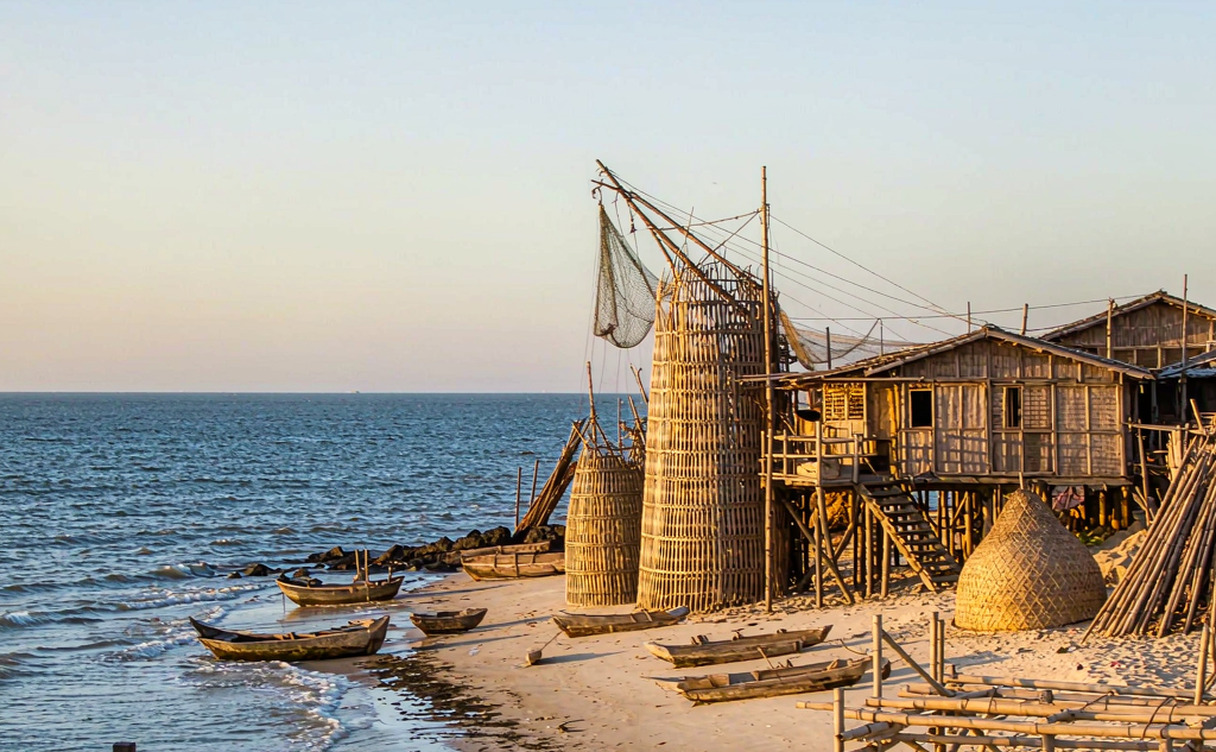
The Jing ethnic culture Wanwei island experience is the cultural heart of the trip. Wanwei (one of the “three Jing islands”) has a small Jing culture museum (¥20), a slender white lighthouse, and a community known for the 独弦琴 (single-string zither) and haunting folk songs. Visit in the morning to catch the fish-market bustle and the women mending nets. In our experience, the warmest welcome comes if you simply sit and let a villager show you the instrument — they are proud of a tradition few outsiders have heard. The islands connect to the mainland by causeway, so a car or scooter gets you there easily from Dongxing, about 40 minutes south.
Fangchenggang seafood market
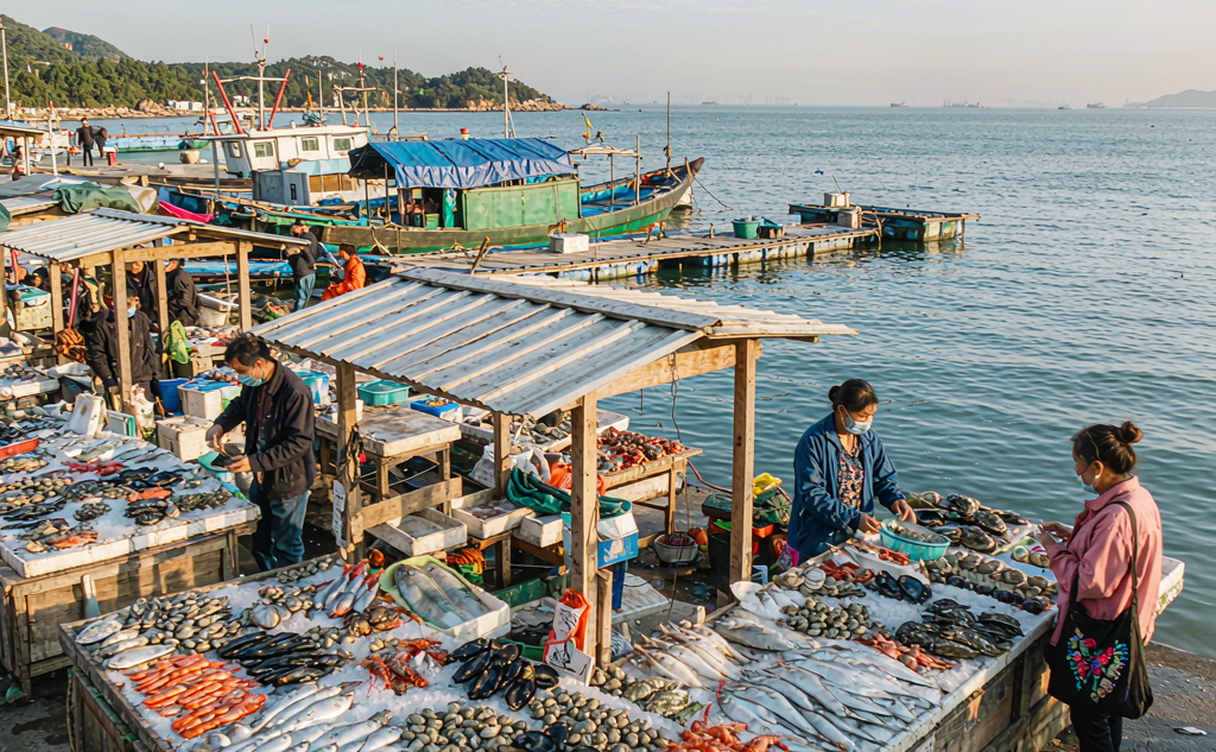
The Fangchenggang seafood market at Qisha (企沙) is where the day’s catch lands — prawns, crabs, groupers, and the local 沙虫 (sea worm, a delicacy). You buy by weight and take it to a nearby stall to be cooked (processing ¥10–30 per dish). A feast for two runs ¥120–220, far cheaper than a city restaurant for equal freshness. We tell travelers to go before 9 a.m. for the best selection and to agree prices clearly first. A bowl of the local fish-congee afterward is the perfect close to a morning at the docks.
Getting there
Fangchenggang North Station is on the high-speed line; from Nanning it’s about 1–1.5 hours (¥60–100), and from Beihai roughly 1 hour (¥40–70). Dongxing, the border town, is 40 minutes south by bus or car. For rail booking, see our China high-speed train guide for foreigners. Many travelers combine Fangchenggang with a ferry hop to Weizhou Island via Beihai, which makes a satisfying sand-and-culture week.
Best time to visit
The best time to visit Fangchenggang is April–October for swimming and beach weather, with the calmest sea in May–June and September–October. Winters are mild (15–22°C) and good for the market and culture without swimming. We avoid the peak typhoon window of late July–August when ferries and beaches can close. Spring is our favorite — warm but not sticky, and the Jing islands hold small festivals of song.
Food and stay
Beyond seafood, try 京族鱼露 (Jing fish sauce) with vegetables, and the Vietnamese-influenced rolls in Dongxing, a reminder of the nearby border. City hotels run ¥200–360/night; beachside guesthouses on the peninsula are ¥260–500. We recommend staying near Jintan so you can walk the sand at dawn, then returning to the city for the seafood market the next morning.
A suggested 2-day plan
Day 1: train from Nanning to Fangchenggang, afternoon Jintan beach and sunset, overnight on the peninsula. Day 2: morning Qisha seafood market, transfer to Dongxing, Wanwei Island and the Jing museum, evening return via Beihai or Nanning.
Costs at a glance
A comfortable day in Fangchenggang runs modest by coastal China standards. Transport from Nanning or Beihai is ¥40–100 one way by second-class rail; a private car for the day (covering Jintan, Qisha, and Dongxing) is ¥400–600. Attractions are cheap — Jintan is free or ¥20–40, the Jing museum ¥20, and the cave-free coastline costs nothing to walk. Meals are the pleasant surprise: a serious seafood spread for two at Qisha is ¥120–220, while a bowl of noodles in the city is ¥15–25. Budget travelers can do a day on ¥250–350 all-in; those staying at a peninsula resort and eating seafood nightly should plan ¥600–900. We tell first-timers to keep ¥200–300 in small cash for market purchases, bicycle rental, and the island entry stamps.
Getting around locally
Within Fangchenggang city, DiDi rides are cheap (¥10–25 across town) and the bus network is decent but unsigned in English. For the Jiangshan Peninsula and Dongxing, a private driver is the practical choice — public buses exist but are slow and confusing for non-Chinese speakers. On Wanwei Island, renting a scooter (¥40–60/day) lets you reach the quieter northern shore where the Jing still dry their nets. We’ve found that having your hotel call the driver and negotiate a flat day rate removes most of the friction.
Practical notes
English is minimal; carry a translation app. At the seafood market, weigh on the official scale and confirm the cooking fee upfront. If you cross to Vietnam at Dongxing, you need a valid visa in advance — we don’t arrange border crossings, just the China side. Keep your passport handy for the occasional checkpoint near the frontier, and carry cash for the small island entries.