

Ji’an, in the hilly center of Jiangxi province, is one of those Chinese cities that wears two distinct stories at once. This Ji’an travel guide is for travelers who want both: the red revolutionary history of Jinggangshan, often called the cradle of the Chinese revolution, and the older Luling culture of scholars, academies, and riverside villages. Most foreign visitors have never heard of it, which means you get the history without the crowd. If you are already planning Jiangxi or nearby Hunan, Ji’an is an easy and rewarding add-on.
How to Get to Ji’an
Ji’an has a high-speed rail station on the line linking Nanchang and Changsha, which puts it within reach of two provincial capitals. From Nanchang the train runs about 90 minutes to two hours, and from Changsha travel guide it is roughly two hours in the other direction. Many travelers also approach from the south via Guilin travel guide, since a longer rail route threads through Hunan and into Jiangxi. You can read about the Jiangxi capital first in our Nanchang travel guide, which explains the airport and the rail hub you will likely transfer through. Within Ji’an, the city core is compact, but Jinggangshan is a separate mountain county about two hours southwest, best reached by a hired car or the dedicated shuttle buses.
Getting Around Ji’an and Jinggangshan
Once you have sorted out how to get to Ji’an, the trickier logistics are internal, and the mountain is the reason. Jinggangshan is not a single site you drive to but a scattered county of memorials, museums, and trailheads strung along roads that climb and switchback for kilometres. There is also a separate Jinggangshan railway station and a small airport serving the mountain area directly, which means some travellers skip Ji’an city altogether. If you want both halves of this guide, base yourself in the city first and treat the mountain as an overnight rather than a day return.
Up on the massif, a park shuttle system connects the main scenic clusters and is included with the entrance ticket, so you rarely need your own vehicle beyond the town. The shuttles run on fixed loops, however, and the last ones down the hill leave earlier than most people assume. Check the final departure at the stop where you get off, not at the gate where you arrived.
In Ji’an city itself, taxis are cheap and the Luling streets and Bailuzhou Academy sit close enough to combine on foot. The outlying villages such as Meipi are a different matter: buses are slow and drop you some way from the clan halls, so a hired car for that half day is the sensible call.
Things to Do in Ji’an
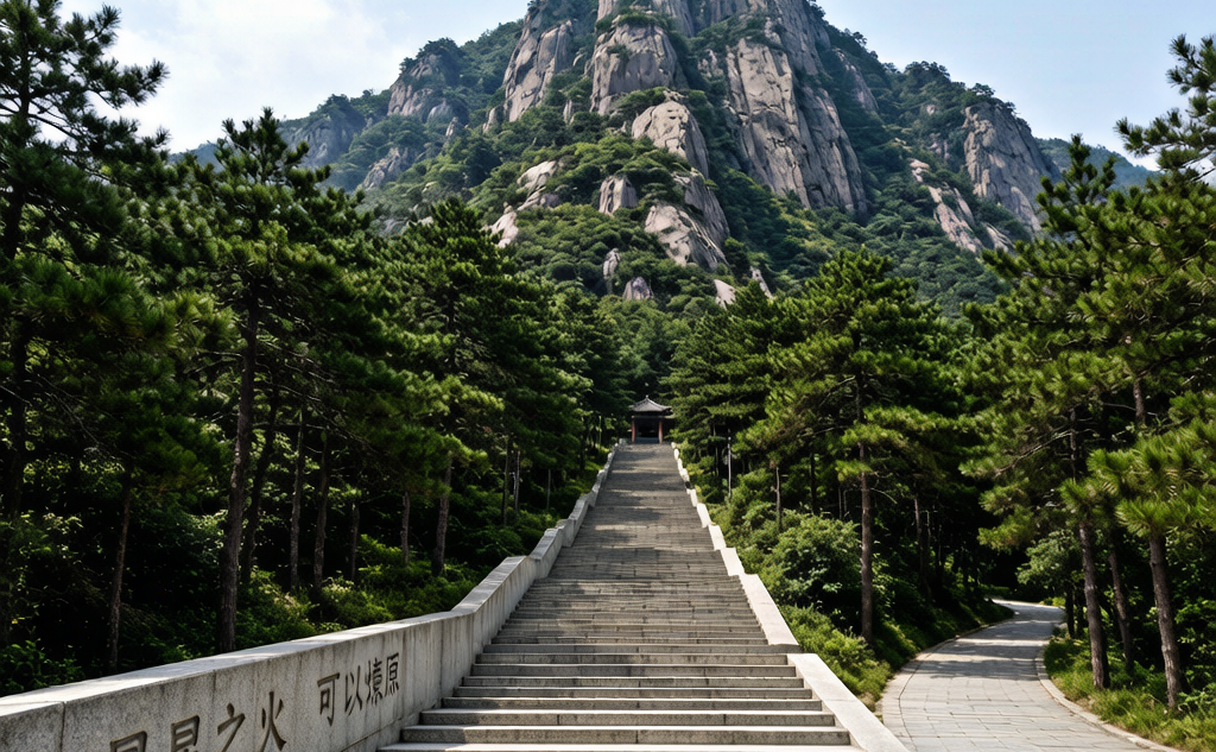
Jinggangshan is the headline for most visitors. It was the early rural base area where the revolutionary forces regrouped, and today the mountain is a mix of memorial sites, museums, and genuinely dramatic scenery. The main ridge offers panoramas over ridged green peaks, and the museums explain the period with documents, photos, and reconstructed camps. You do not need a political interest to enjoy it: the cable-car rides and the hike to the Five-Fingered Peak give you mountain views that stand on their own. Plan a full day, because the sites are spread along the roads that climb the massif.
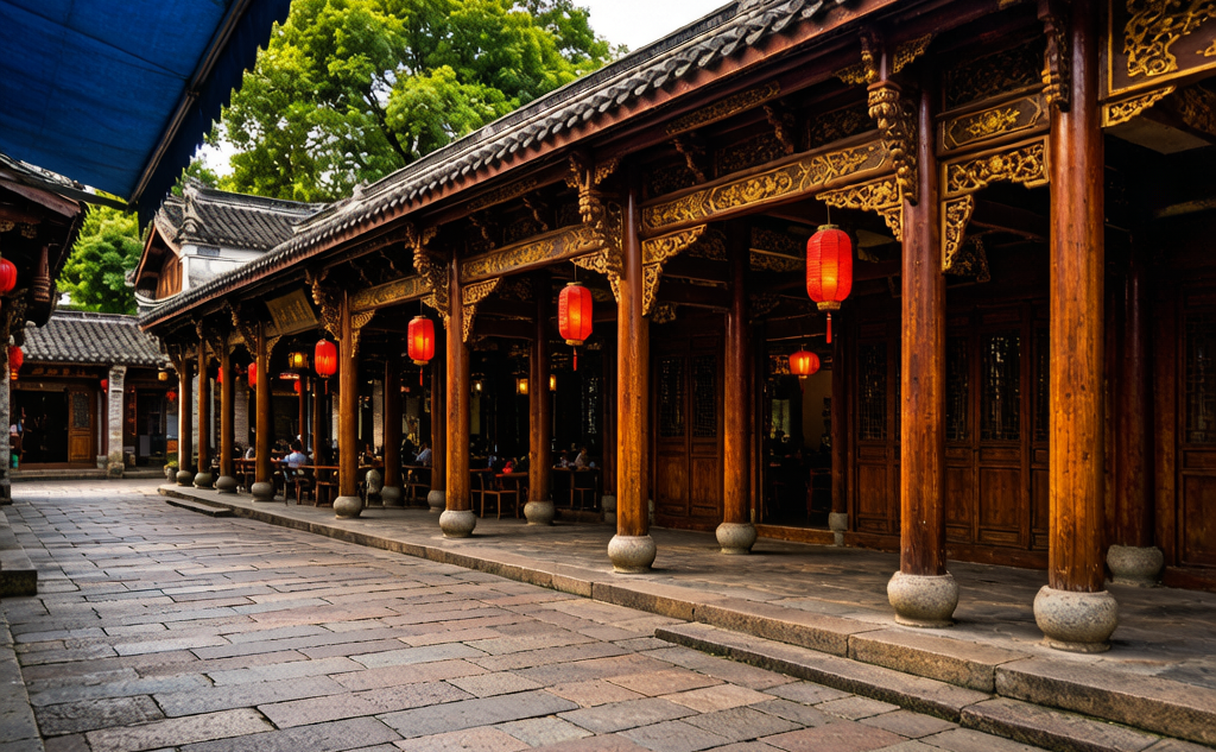
Back in Ji’an city, the Luling heritage is the quieter draw. Bailuzhou Academy (白鹭洲书院) sits on an island in the Gan River and was a respected classical academy for centuries; the riverside setting is lovely even if you skip the exhibits. The old Luling streets, with their wooden arcade shopfronts, survive in pockets of the city and reward a slow walk. For village life, the surrounding counties hold well-kept old settlements such as Meipi (渼陂), where the clan halls and carved doorways show how wealthy Jiangxi merchant families built.
Qingyuan Mountain (青原山), on the city’s edge, is a Zen site centered on Jingju Temple, one of the older Chan Buddhist monasteries in the region. The wooded slopes and the steady chant of the temple make a good half-day reset after the museums. Food follows Jiangxi style: salty, spicy, and built around river fish, dried bamboo shoots, and the local Suichuan tea known as dog-gunao. Night stalls near the river serve cheap noodles and stir-fries.
Best Time to Visit Ji’an
The best time to visit Ji’an is spring (April to May), when the mountains are green and the rice terraces are filling with water, and autumn (October to November), when the air is clear and the temperatures are comfortable for hiking Jinggangshan. Summer is hot and can be stormy, though the mountains stay cooler than the plains. Winter is mild by northern standards but grey, and some mountain roads get slick. For the balance of good views and good walking, the two shoulder seasons are the safe choice.
Pairing Ji’an With Neighbors
Ji’an sits neatly between Jiangxi and Hunan, so it links well with several routes. The Xiamen travel guide is useful if you are building a coastal-to-inland arc through Fujian and Jiangxi, and for travelers interested in minority culture further west, the Kaili travel guide opens the Miao and Dong villages of southeast Guizhou. Each adds a different texture to a trip that starts in Ji’an.
A Ji’an Itinerary
A reasonable Ji’an itinerary runs three days. Day one: arrive, walk the Luling old streets and Bailuzhou Academy in the city, and eat by the river. Day two: leave early for Jinggangshan, spend the day on the ridge, museums, and a cable-car ride, and stay overnight in the mountain town or return late. Day three: visit Qingyuan Mountain in the morning, then take a village trip such as Meipi if time allows before your onward train. Travelers short on time can compress to two days by dropping the village and focusing on the city and Jinggangshan.
What a Ji’an Trip Costs
Ji’an is inexpensive, with one caveat worth knowing before you book. In the city, hotels are priced for domestic business travel and sit comfortably in the budget to mid-range bracket, and meals are cheaper still. A bowl of river fish soup with bamboo shoots, or a plate of noodles from a stall near the Gan River, costs very little, and even a proper restaurant dinner for two stays modest by any national standard.
The mountain is where costs concentrate. Jinggangshan sells a single entrance ticket that covers the main scenic areas and the shuttle network for a set number of days, which is good value given how spread out the sites are, but the cable cars and a few individual museums are charged separately on top. Accommodation in the mountain town also runs higher than in the city, and it climbs sharply during the summer holidays and around national anniversaries, when study tours book out the better hotels months ahead. If your dates fall in those windows, reserve early or plan to sleep in Ji’an and travel up.
Beyond that, allow for a driver on the days you visit the villages, and keep a reserve of small cash. Village stalls, temple donation boxes at Qingyuan Mountain, and some minor entry gates do not take cards, and rural ATMs are not always reliable.
Ji’an Travel Tips
A few practical notes. Jinggangshan is cooler and wetter than the city, so pack a light rain layer even in spring. English is minimal outside the major memorial museums, so keep hotel names in Chinese for taxis. The mountain sites are popular with domestic study tours, so mornings are quieter. Carry cash for village stalls and small entries, and confirm the opening days of the smaller academies, since some close weekly. If you are driving the mountain roads, allow extra time for the winding climbs.
For an independent background on the area’s administration and history, Ji’an, Jiangxi on Wikipedia is a reliable reference.