

A China hotel chains comparison is the fastest way to take the guesswork out of where you sleep on the mainland. Unlike in Europe or North America, where travellers default to Marriott or Accor, the hotels you see most often on Chinese streets and booking apps are homegrown brands that rarely appear abroad. This guide walks through the five chains foreign visitors actually book — Hanting, Ji Hotel, Atour, Orange and a few others — so you know exactly what you get for your money and where each one fits into your trip. If you have only ever stayed in international flagships, the value on offer here will surprise you.
Why a China Hotel Chains Comparison Matters for Foreign Visitors
Most first-time visitors assume international chains are the safe choice, but in China the domestic brands outnumber and often out-perform them on value. A Hanting room in a prime Beijing or Shanghai location can cost half of an equivalent Holiday Inn, with cleaner bathrooms and newer fittings. The catch is that the branding, review language and app interfaces are almost entirely in Chinese, which is why a clear China hotel chains comparison saves you from booking a place that looks fine online but disappoints in person.
The good news is that the major Chinese groups have caught up fast on foreigner-friendly practices. Staff at city-centre properties usually speak basic English, payment by Visa or Mastercard works through Trip.com, and passport registration at check-in is routine. If you want a fuller picture of the capital’s neighbourhoods, our where to stay in Beijing guide breaks down which districts put you closest to the sights, while the equivalent where to stay in Shanghai guide does the same for the east.
The Big Groups Behind the Brands: Huazhu, Jinjiang and BTG
Before comparing individual hotels, it helps to know who owns them. Hanting, Ji Hotel and Orange all sit under Huazhu Hotels Group, China’s largest budget-to-midscale operator with more than 10,000 properties across the country. Atour is its own listed company focused on the lifestyle mid-scale segment. Older state-linked names such as Home Inn and Motel 168 belong to BTG Hotels and Jinjiang International, the Shanghai-based giant that also controls Louvre Hotels in Europe.
This matters because loyalty and booking flow through the parent. Huazhu runs one app (Huazhu, also branded H World) covering Hanting, Ji and Orange, while Jinjiang has its own ecosystem. For a traveller, the practical takeaway is simple: pick a group, learn one app, and you can book across a whole family of brands without re-entering your passport details every single time. It also means a problem at one property can often be resolved through the group’s central hotline in English.
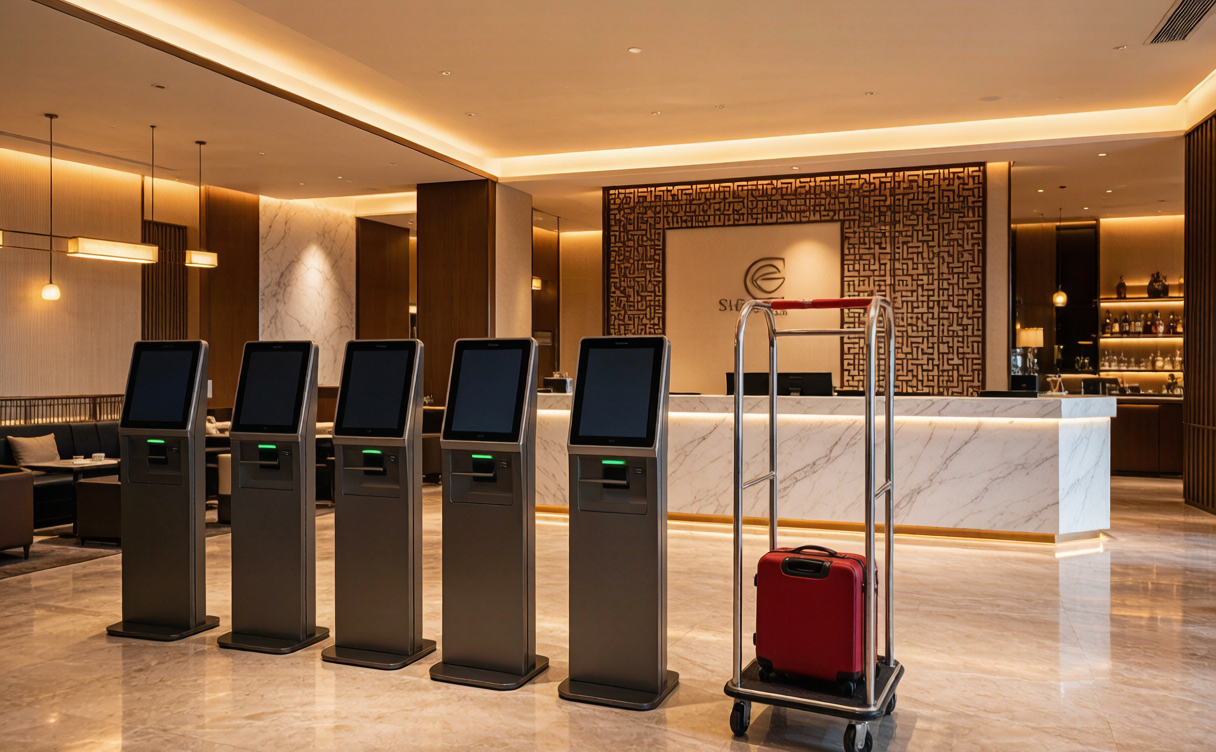
Hanting: The Reliable Budget Baseline
Hanting is the chain you will see on almost every Chinese high street, and it is the safest budget bet for foreigners. A standard Hanting room runs ¥180–¥320 per night (about US$25–$45), depending on city and season. For that you get a compact but spotless room, a firm mattress on a low platform bed, an electric kettle with free tea, a glass-enclosed shower and reliable air conditioning. Many branches have a water dispenser in the corridor and a small front-desk convenience shelf.
What Hanting does not give you is character. Rooms are functional and nearly identical from city to city, breakfast is a basic Chinese spread of congee and steamed buns, and soundproofing varies by building age. Still, for a one- or two-night stop between trains, it is hard to beat on consistency. If you are weighing it against hostels, our hostel versus hotel in China breakdown shows where each makes sense for your budget, and a budget-focused traveller will also want to read our China travel budget per day guide before locking in lodging costs.
Ji Hotel: The Quiet Step-Up
Ji Hotel (全季, romanised as Ji Hotel) is Huazhu’s mid-scale answer to a calm, minimalist stay. Prices sit at ¥320–¥520 per night (US$45–$72), and the difference over Hanting is immediately visible: warmer wood tones, better lighting, a proper workspace, and noticeably thicker walls. Many Ji properties also include a small lounge with free coffee and a simpler, faster check-in that suits travellers arriving late.
For foreign visitors who want a peaceful base without boutique-hotel prices, Ji is the sweet spot. It is especially strong in second-tier cities where international brands are scarce, so it is a reliable default when you are outside the big hubs. Our best boutique hotels in China article covers the more design-led options if you want something with a stronger sense of place than a chain can offer.
Atour: The Lifestyle Mid-Scale Pick
Atour targets younger business travellers and leans into a library-and-coffee aesthetic. Nightly rates are ¥420–¥700 (US$58–$97), putting it close to a Courtyard or Novotel but usually with larger rooms and a more modern feel. Atour branches typically have a book-filled lobby, a 24-hour gym, and a breakfast spread that includes western items such as bread, eggs and coffee alongside Chinese dishes, which is a real relief after a week of congee.
The chain’s app and membership perks are polished, and many city-centre Atours sit above shopping malls with easy metro access. If your trip mixes work and sightseeing, Atour is a comfortable default. For Shanghai-specific neighbourhood advice, see our where to stay in Shanghai guide, which maps the chain’s best-located properties near the Bund and Jing’an.
Orange and the Other Value Brands
Orange (橙子酒店) and sibling value brands such as Hanting Premium and Starway fill the gap between pure budget and mid-scale. Expect ¥260–¥400 (US$36–$55) and a younger, brighter design than classic Hanting, often with Instagram-friendly common areas and bolder colours. These are good picks near universities, nightlife districts and transport hubs where you want energy more than quiet.
Below is a quick reference for how the main chains stack up on price and feel:
| Chain | Typical nightly price (¥) | Style | Best for |
|——-|————————–|——-|———-|
| Hanting | 180–320 | Functional budget | Short stops, transit cities |
| Ji Hotel | 320–520 | Calm minimalist | Quiet mid-scale base |
| Atour | 420–700 | Lifestyle business | Work plus leisure trips |
| Orange | 260–400 | Bright value | Trendy districts, longer stays |
What to Expect in a Chinese Business Hotel
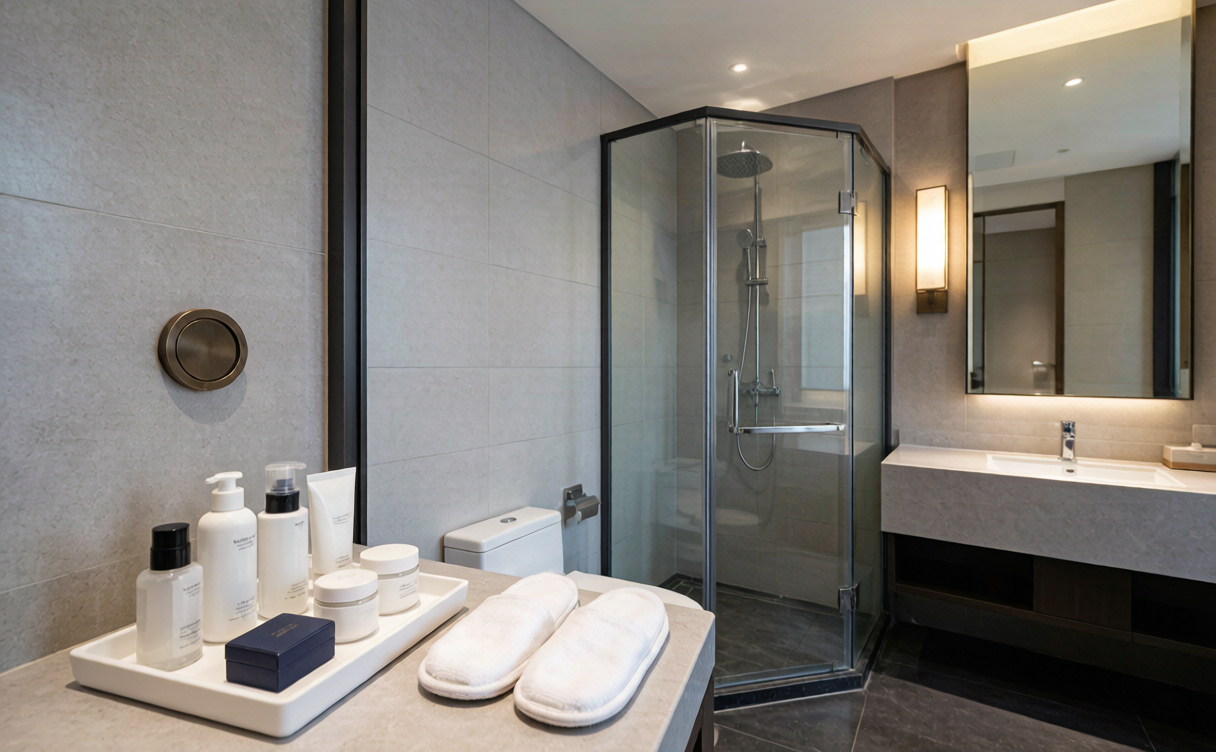
A useful part of any China hotel chains comparison is knowing what the standard “business hotel” actually delivers. Expect a low platform bed rather than a high frame, a kettle and two cups, slippers and sometimes pyjamas, and a bathroom where the shower glass may not fully seal — bring a spare towel to mop the floor. Lighting is usually bright and a little harsh, and power sockets often include a universal type near the desk.
Wi-Fi is free but sometimes requires a Chinese phone number to register; at chain hotels the front desk can usually log you in manually. Foreign TV channels are rare, so download shows before you travel. Air conditioning is strong, and in winter many northern hotels switch to central heating with no in-room thermostat, so pack a layer even indoors. None of this is a problem once you know to expect it, and these small routines become second nature within a couple of nights.
Loyalty, Common Pitfalls and FAQ
Both Huazhu and Jinjiang run free membership tiers that quietly cut your rate and unlock small perks. A Huazhu member account (sign-up through the H World app) typically saves ¥10–¥30 per night and lets you collect points toward future stays; Jinjiang’s program works similarly across its Home Inn and Metropark properties. Neither is essential for a one-off trip, but if you stay ten nights or more, the savings add up to a free night or two, and member rooms are often the newer renovated inventory.
The most common booking mistake is judging a Chinese chain by its cheapest photos. Hanting’s entry rooms are tiny; pay the extra ¥80 for a “Premium” or “Comfort” category if you need space. Another pitfall is assuming every property accepts foreigners — almost all city-centre branches do, but some remote county-town Hantings lack the licence to register foreign passports, so always confirm “foreigner accepted” on the listing. Ask for a high floor away from the elevator and the street, because Chinese hotel corridors carry sound and delivery scooters run late. For daily spending context, our China travel budget per day guide helps you see where lodging fits alongside food and transport.
Do these chains accept foreign credit cards? Through Trip.com and the chain apps, yes for the room charge. At the physical front desk, Visa and Mastercard are accepted at most city properties, though carrying some yuan cash avoids any terminal hiccup in smaller towns.
Is breakfast worth it? At Ji and Atour, usually yes if you want a quick western option. At base Hanting, street food nearby is often better and cheaper, so skip it and eat out.
Can I book without a Chinese phone number? Yes — Trip.com and the international versions of the chain apps let you reserve with an email and passport number. A local SIM helps only for receiving the door-access code at a few smart locks.
According to Lonely Planet’s China travel guide, the country’s domestic hotel standards have risen sharply in the past decade, and the chains above are a big reason budget travellers can now expect a clean, secure room almost anywhere on the mainland.