

If you’re basing yourself in Shanghai and want a change of pace, the best water towns near Shanghai are the easiest cultural escape you can make. Once you’ve figured out how to get to China and settled into the city, these canal towns are the perfect first excursion — within two hours you can trade skyscrapers for stone bridges, wooden boats, and Ming–Qing architecture that has barely changed in centuries. This guide walks you through eight canal towns, how to reach each on a day trip, and how to dodge the worst of the crowds.
Most travelers slot a water town into a broader China itinerary alongside Suzhou or Hangzhou. That’s a smart move, but the towns also stand alone as half-day or full-day outings. Whether it’s your first visit or your fifth, the places below deliver exactly the slow, photogenic China that guidebooks promise.
How to Choose the Best Water Towns Near Shanghai for Your Trip
Not all canal towns are created equal. Zhujiajiao is the closest and most convenient; Zhouzhuang is the most famous and the most crowded; Wuzhen and Xitang are the most atmospheric after dark. If you have a single day, choose by transport time and mood rather than trying to tick off several. One well-chosen town beats a rushed loop of three.
Before you set out, skim our China travel guide for first-timers for the payment apps, SIM cards, and everyday etiquette that apply across the country.
Zhujiajiao — The Closest Escape
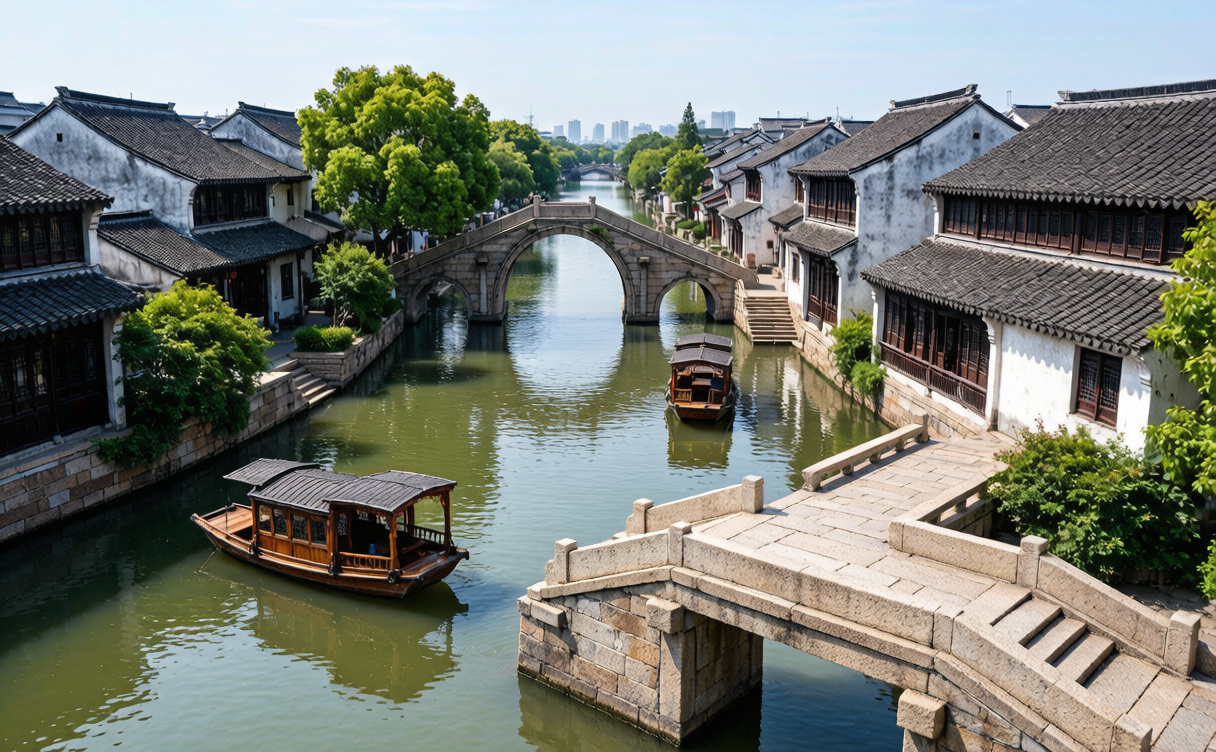
Just 40–50 minutes from downtown Shanghai by metro plus a short walk, Zhujiajiao is the obvious Zhujiajiao day trip and the gentlest introduction to the genre. Its narrow lanes, the soaring Fangsheng Bridge, and the riverside kezhan (old inns) make it lively yet manageable. Go early on a weekday and you’ll have the canals largely to yourself. Don’t miss the tiny teahouses tucked into the upper floors of the lane houses, where you can watch the boats drift by with a cup of green tea.
Zhouzhuang — The Poster Child
About 1.5 hours from Shanghai, Zhouzhuang markets itself as “the No. 1 water town in China.” It’s gorgeous and heavily restored, centered on the double bridges that appeared in a famous ink painting. Expect crowds on weekends; arrive at opening (around 7:30 a.m.) to catch soft morning light before the tour buses. A gondola-style boat ride through the inner canals is the signature experience here, and the lakeside restaurants serve fatty river fish worth the stop.
Tongli — Quiet and Scholarly
Also near Suzhou, Tongli is smaller and calmer, woven from fifteen canals and dozens of preserved gardens. The Tuisi Garden, a refined example of classical design, is the standout. It’s an easy add-on if you’re already visiting Suzhou — see our Suzhou travel guide for the full picture, including how to combine Tongli with the city’s own canals and the Humble Administrator’s Garden.
Xitang — Lanterns and Long Corridors
Xitang, in Zhejiang province, is famous for its covered riverside corridors — more than a kilometer of them — and the hundreds of lanterns that glow at dusk. Stay until evening if you can; the nighttime scene is the town’s signature, and the reflections on the water are worth the late return to Shanghai. It’s roughly 1.5–2 hours from the city by bus or car, and the lanes are lined with bars that come alive after dark.
Wuzhen — Polished and Theatrical
Wuzhen is the most commercialized but also the best run, split into East and West scenic zones. The West Zone at night, with its reflection-lit canals and quiet bars, is genuinely magical, and the town hosts a well-known theatre festival each autumn. Plan a full half-day here, and book the through-ticket that covers both zones so you’re not turned back at a gate.
Nanxun — The Understated One
Nanxun sits between Shanghai and Hangzhou and blends Chinese courtyards with European-style mansions from its silk-trading heyday. It’s less touristy than its siblings and a favorite among repeat visitors who want substance over spectacle. Pair it with a Hangzhou stop if you’re heading south toward West Lake, since the two make a natural two-day loop.
Luzhi — Tiny and Untouched
Luzhi is a compact town near Suzhou with more than 40 ancient bridges and almost no international crowds. It’s ideal if you want the atmosphere without the ticketed zones. Two hours is plenty to wander the lanes and watch life unfold along the water, and the small museums on local textiles are a pleasant surprise.
Jinxi — The Local’s Choice
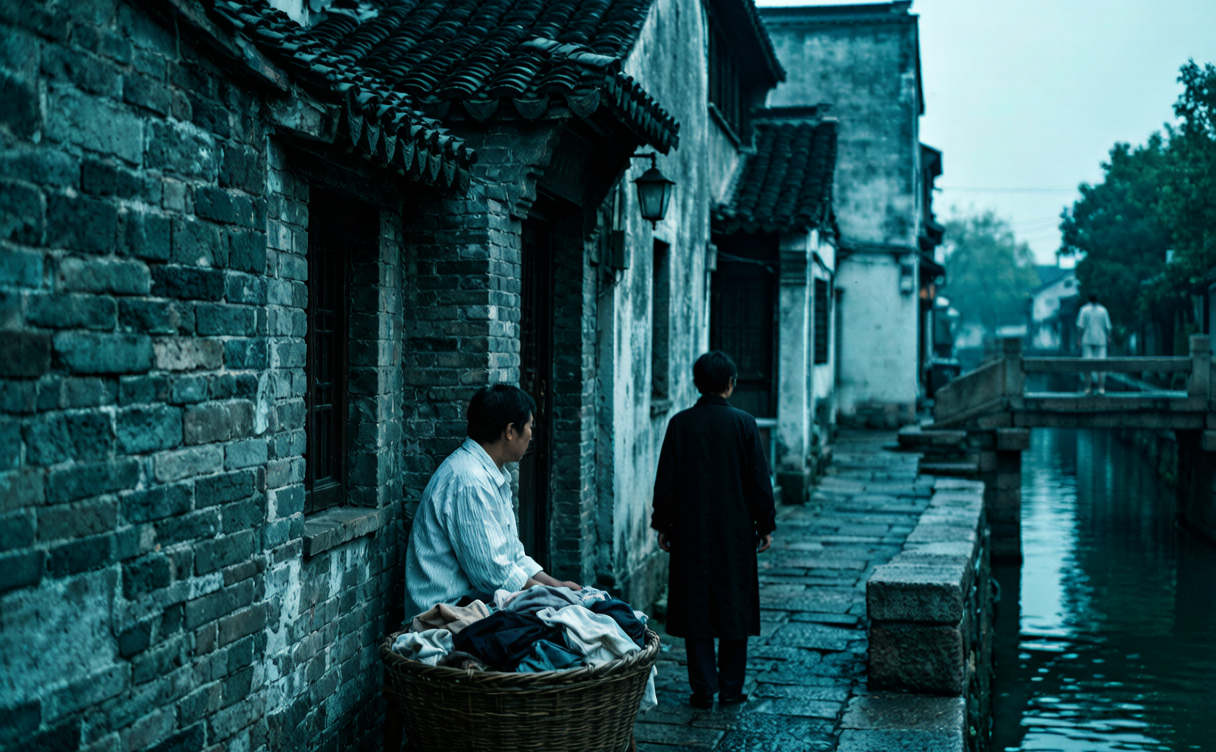
Jinxi, also near Suzhou, keeps a working-town feel: grandmothers washing vegetables at the water’s edge, no entrance fee for most of the old core. Come here when you’ve had your fill of postcard perfection and want to see a town that still belongs to its residents. The sunrise fish market on the canal is the real show.
Getting There: One-Day Trip Logistics
For Zhujiajiao, take Shanghai Metro Line 17 to Zhujiajiao Station and walk about 10 minutes. For the farther towns, the simplest options are a direct tourist bus from Shanghai’s long-distance stations, a ride-hailing car, or a high-speed train to Suzhou or Hangzhou followed by a local bus. Trains are the fastest and most reliable — Suzhou is just 25 minutes from Shanghai on the bullet train, and from there Zhouzhuang, Tongli, and Luzhi are short hops by bus or taxi.
If you’d rather not piece together local transport, many visitors book a private driver for the day; it costs more but removes the guesswork and lets you combine two nearby towns. Either way, leave Shanghai before 8 a.m. to make the most of your time and beat the midday crush at the ticket gates.
What to Eat and Do in the Towns
The things to do in China’s water towns are delightfully low-tech: ride a wooden boat, photograph the bridges, sip tea in a riverside house, and eat your way down the lane. Local snacks to try include zongzi (sticky-rice dumplings), sweet osmanthus cakes, and Wuzhen’s signature braised lamb in autumn. In Zhouzhuang, the wanluan steamed pork is a quiet classic you won’t find back in the city.
Suzhou, whose classical gardens are inscribed on the UNESCO World Heritage List, makes a natural base — its own canals plus nearby Tongli and Luzhi mean you can tour water towns without returning to Shanghai each night. If you want the bigger-city version of the same charm, our West Lake Hangzhou guide shows how Hangzhou’s lake and canals extend the experience southward toward Zhejiang’s smaller towns.
Best Time to Go and Practical Tips
The best time to visit China generally means spring (April–May) and autumn (September–October), and the water towns are no exception — mild weather, clear light, and manageable crowds. Avoid the week-long National Day holiday in early October, when every town swells with domestic tourists and boat queues stretch for an hour.
A few final China travel tips: wear shoes with grip because the stone gets slick after rain, carry some cash for small vendors, and download an offline map before you leave the city. Most towns charge an all-in-one ticket covering the main courtyards; buy it at the official gate rather than from touts outside. Boats stop running in heavy weather, so check the forecast that morning.
FAQ
Are the water towns worth visiting in winter? Yes, if you don’t mind the cold. January and February are quiet and atmospheric, especially with light rain on the canals. Dress warmly and confirm that boat rides are running before you travel.
Can I visit two towns in one day? Technically, but I don’t recommend it. Pick one town and explore it slowly — that’s the whole point of going, and rushing defeats the calm you came for.
Do I need to speak Chinese? Not really. Signs in the major towns have English, and translation apps handle the rest. In smaller places like Jinxi, a few key phrases go a long way with vendors.
Is Zhujiajiao free to enter? The old town itself is free to walk, but individual attractions and boat rides cost extra, so budget a little even for the “free” town.