

When I first wandered down to the water’s edge in Macau, China, I wasn’t expecting a temple to change the way I understood an entire city. But A-Ma Temple (妈阁庙) did exactly that. Tucked into the green hillside above the Inner Harbour, its granite halls and incense haze feel older than the glittering casinos just a few streets away. This is the oldest Taoist temple in Macau, China, and — remarkably — it gave the city its name. If you want to understand where Macau came from before the neon, this is the place to start.
Getting There
A-Ma Temple sits on the southwestern tip of the Macau Peninsula, right by the Inner Harbour near the Maritime Terminal. The easiest way for a first-time visitor is to take a taxi and ask for “Ma Kok Miu” (the Cantonese name), or simply show the driver 妈阁庙. Buses 1, 2, 5, 6, 7, 10, 10A, 11, 18, 21A, 28B, 34, and MT4 all stop nearby at the Barra area. If you are arriving from Hong Kong by ferry, the temple is only a short ride from the Outer Harbour terminal.
I arrived on a slow morning after landing at the maritime ferry, and the walk from the bus stop took less than five minutes. The approach is part of the charm: you pass a small plaza, then a gateway arch, and suddenly the hillside opens into courtyards layered one above another. Wear comfortable shoes — the steps are uneven granite, and the temple climbs the slope rather than sitting flat.
What to See
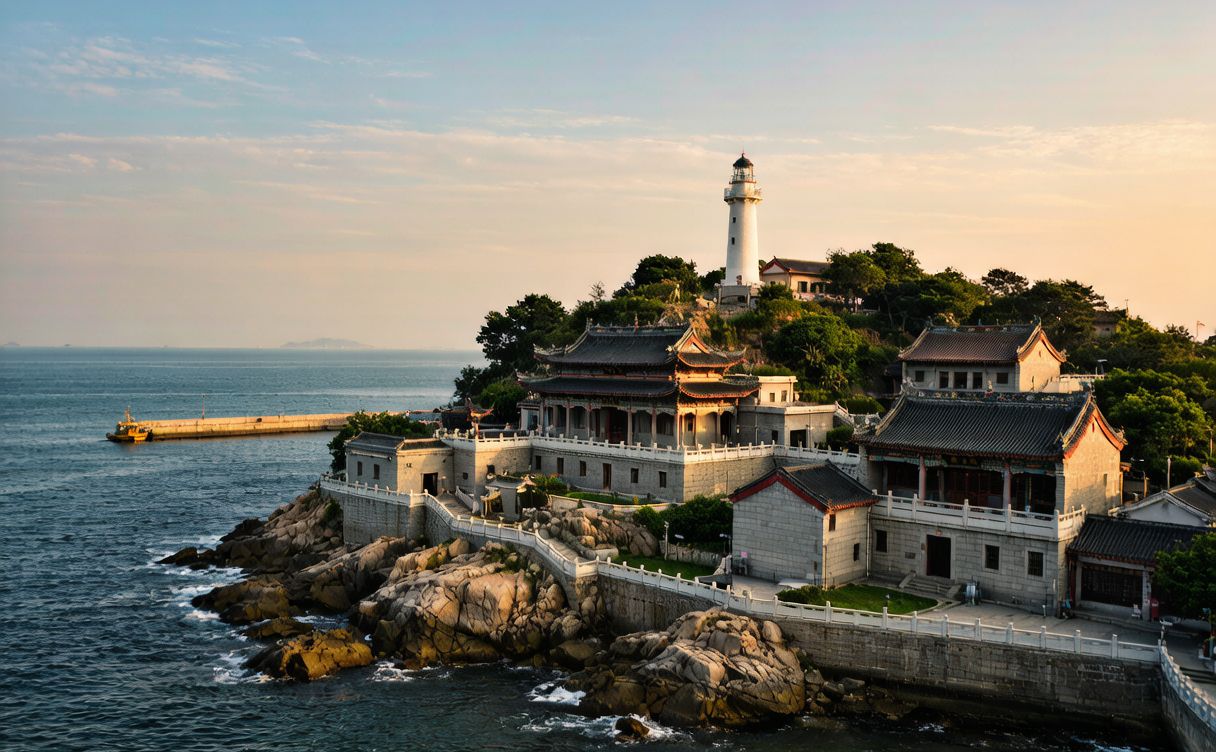
A-Ma Temple is not one building but a cluster of pavilions dedicated to several deities, threaded together by stone steps and shaded courtyards. The main hall honors Tin Hau (the Queen of Heaven) and A-Ma, the sea goddess Mazu, patroness of fishermen and sailors. To stand inside is to breathe centuries of devotion: red lacquer beams, coils of hanging incense, and the soft chant of visitors offering prayers for safe passage.
Higher up the hill you’ll find the Kun Iam Pavilion, the Zhengjiao Chanlin Buddhist hall, and the Memorial Arch. Each level reveals a different view back over the harbour, where junks and ferries still cut the water the goddess is said to protect. My favorite quiet corner was the small granite grotto near the top, where a weathered statue watches over the bay and the breeze carries the harbor’s salt smell.
At the very summit stands the A-Ma Temple Lighthouse (also known as the Barra Lighthouse), one of the oldest lighthouses on the Chinese coast. From up there I could see the whole sweep of the Inner Harbour and, on a clear day, the bridges linking Macau, China to Taipa. It’s a fitting finale: the goddess of the sea and the lamp that guides ships home, side by side.
Spend a moment in the courtyards between the halls and you’ll notice the stone steles and carved couplets left by generations of merchants, sailors, and local families. These inscriptions are more than decoration — they are a written record of the people who passed through, from 19th-century traders to modern-day devotees. I found myself reading the same characters others had traced centuries ago, and it made the continuity of the place feel tangible.
History & The Name
Here is the story that makes this temple unmissable. Local legend says that, long before the Portuguese arrived, a humble girl named A-Ma (Mazu) rested at this bay with a group of fishermen. When a storm rose, she calmed the seas and then ascended to heaven from the very rocks where the temple now stands. The fishermen built a shrine in her honor.
When Portuguese sailors reached this coast in the early 1500s, they asked the name of the place. The locals pointed to the bay and answered “A-Ma Gau” — “A-Ma’s Bay.” The Portuguese rendered it “Macau,” and the name stuck to the whole city. So the word “Macau” itself traces back to this hillside shrine in Macau, China. The temple’s earliest structures date to the early 15th century, with inscriptions and steles recording donations from merchants across the following centuries. It was later inscribed as part of the UNESCO World Heritage “Historic Centre of Macau, China.”
I’ll admit I got chills the first time a guide explained that the city’s name literally means “Bay of the Goddess.” It reframed everything I’d seen — the ferries, the harbor, even the casinos — as layers added on top of a much older story of the sea.
Tips
A few practical notes from my own visit. Go early in the morning if you can; the light on the granite is beautiful and the crowds are thinnest before the tour buses arrive around ten. Bring small cash for incense if you’d like to make an offering — vendors near the entrance sell bundles for a few patacas.
Dress modestly: cover shoulders and knees, as this is an active place of worship. Photography is welcome in the courtyards, but be respectful inside the halls and avoid flashing in people’s faces during prayer. Allow at least 45 minutes to an hour to climb at a relaxed pace and enjoy the views. Combine it with a stroll along the nearby Barra waterfront or the Ruins of St. Paul later the same day — they tell the other half of Macau, China’s layered history.
Best Time
Macau, China has a humid subtropical climate, and the temple is mostly open-air, so timing matters. The most comfortable months are October through March, when the heat and humidity drop and the harbour breeze is pleasant. I visited in late autumn and found the climb easy and the light golden.
Avoid the peak of summer (June to August), when temperatures climb past 30°C with sticky humidity and the midday sun on the granite steps is relentless. If you must come in summer, go at opening time and carry water. The Lunar New Year and the A-Ma Festival (around the third lunar month) bring vibrant celebrations, but also large crowds — wonderful for atmosphere, harder for photos. During the A-Ma Festival I watched a procession wind up the hill with lion dancers and drifting smoke, a living echo of the very traditions that named this city.
Good to Know
A-Ma Temple is free to enter and generally open from early morning until around 6 p.m. It is managed as part of Macau, China’s heritage sites, and basic facilities like restrooms are available near the entrance plaza. The surrounding Barra district is also home to the Maritime Museum if you want to extend the maritime theme.
For official opening hours, event dates, and heritage information, check the Macau Government Tourism Office. If you’re building a multi-city itinerary, many travelers pair Macau, China with nearby Hong Kong’s Victoria Peak or a quick hop to the Shenzhen Travel Guide — both are an easy ferry or bridge crossing away.