

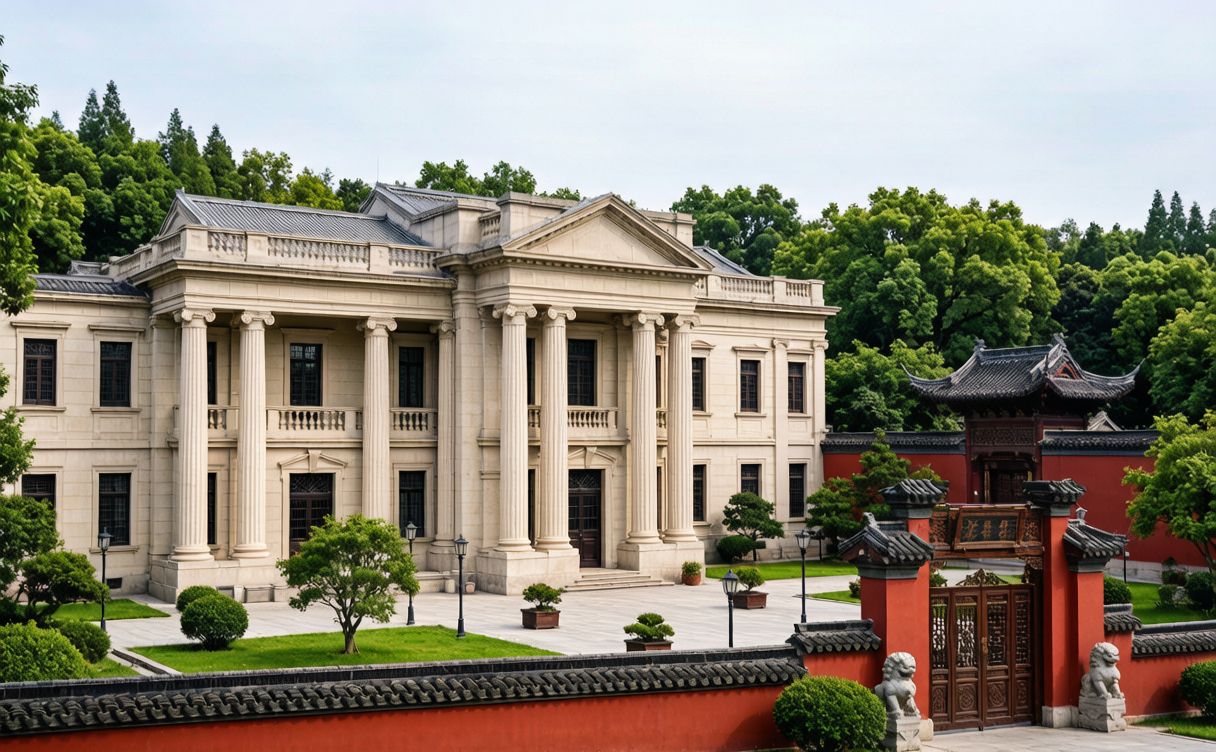
I still remember the first time I walked through the red-pillared gate of the Nanjing Presidential Palace. One moment I was on a noisy city street, the next I was standing in a quiet courtyard that once held the weight of modern Chinese history. If you are planning a trip to Nanjing, this is the single sight I would tell you not to skip.
The Nanjing Presidential Palace is not a palace in the imperial sense. It is a sprawling government complex that tells the story of China’s transition from imperial rule to the modern republic. I have visited many historic sites across China, but few pack so many layers of history into one walkable space.
In this guide I will share exactly how I got there, what I found worth seeing, and the practical tips that made my own visit smoother.
Getting There
The easiest way to reach the Presidential Palace Nanjing is by metro. Take Line 2 or Line 3 and get off at Daxinggong Station. From either exit, it is a flat, signposted 10-minute walk to the main entrance on Changjiang Road.
I found the metro far less stressful than a taxi, especially on weekend mornings when the surrounding roads get clogged. If you do take a cab, show the driver “总统府” (Zongtong Fu) or the pinyin “Zongtongfu” to avoid confusion.
The site opens at 8:30 am and last entry is usually around 5:00 pm in summer, 4:30 pm in winter. I arrived at opening time and was glad I did — the open courtyards stay cool and the tour groups had not yet arrived.
Give yourself a buffer for security screening at the gate, which in my experience took five to ten minutes on a normal morning and longer on holidays. There is no need to arrive an hour early, but do not cut it to the last fifteen minutes either, or you may feel rushed before you even step inside.
Buy your ticket online in advance if you can. During national holidays the on-site queue can stretch around the block, and the timed-entry system sells out.
What to See
The complex covers roughly 90,000 square meters, so do not expect to breeze through in twenty minutes. I spent a relaxed three hours and still felt I had skimmed a few halls.
The first building inside is the former office of the provisional government. This is where Sun Yat-sen was inaugurated as the provisional president in 1912, an event that ended more than two thousand years of imperial monarchy. Standing in that room, I found it easy to grasp why this place matters to people in China.
Further in sits the main executive building, a handsome Western-style structure built in the 1920s and 1930s. This was the working heart of the former ROC executive seat. The wood-paneled offices, the grand staircase, and the council chamber have been restored with period furniture, and you can almost picture the meetings that shaped the country.
Do not miss the small but moving exhibition on the ground floor. It uses photographs, uniforms, and documents to trace the site’s long life — from the Qing-era Jiangnan Zhili Yamen to the republican government and beyond. I read every placard; the timeline helped me connect the dots between the different wings of the palace.
Beyond the executive building, I also explored the former secretariat offices and the vice-presidential residence. These side wings are quieter than the main halls, and that is precisely why I liked them. You can peer into desks left as they were, with ink stones and leather chairs, and get a sense of the daily grind behind the grand history. A guide told me that the site changed hands several times in the 20th century, which is why the exhibits are careful to present each era on its own terms rather than through a single storyline.
The Gardens & Halls
What surprised me most was how Chinese and Western architecture share the same grounds without feeling messy. One minute you are in a neoclassical corridor, the next you turn a corner into a classical Jiangnan garden.
The gardens behind the main buildings are my favorite part of the whole visit. There is a pond, a rockery, a covered walkway, and a two-story pavilion called the Qixia Pavilion where officials once relaxed. I sat there for a while with a bottle of water, watching koi drift under the bridge. It is the kind of calm spot that makes a busy sightseeing day feel slower.
The Jiangnan Zhili Yamen section, the oldest surviving part, is a reminder that this Nanjing palace predates the republic by centuries. The Qing government used it as the seat of the Jiangnan viceroyalty, and the layout of those halls follows traditional courtyard rules. Walking from the yamen to the Western wing is like moving through two different centuries in a single afternoon.
If you enjoy photography, the late afternoon light on the tiled roofs is worth waiting for. I took my best shots around 4 pm, when the crowds thinned and the shadows lengthened across the white walls.
There is also a secondary courtyard I almost walked past, tucked behind the rockery, where a small bridge crosses a narrow stream. Local visitors told me it is a popular spot for wedding photos, and I could see why — the framing of the water, the lattice windows, and the distant roofline is near perfect. I lingered there longer than anywhere else, partly for the view and partly because the shade made it the coolest corner of the complex on a warm day.
Tips
Here are the things I wish I had known before my first visit:
- Wear comfortable shoes. The complex is huge and mostly paved, but you will walk a lot.
- Bring water and a small fan in summer. Shade is limited in the open courtyards.
- Rent the audio guide or scan the QR plaques. The architecture is beautiful, but the stories behind each room are what make it memorable.
- Give yourself at least two and a half hours. Rushing means missing the garden, which I think is the best part.
- Combine it with nearby 1912 District for food. That bar-and-restaurant block is a five-minute walk and saved me from a hangry afternoon.
I also recommend visiting on a weekday if your schedule allows. Tuesday through Thursday the halls felt airy, while my friend who went on Sunday described it as shoulder-to-shoulder.
One practical note on tickets: the price is modest for such a large site, and students with a valid ID get a discount. Keep your paper or e-ticket handy, because staff may check it again at the inner gates. I learned this the hard way when I tossed the receipt and had to backtrack to the entrance. There are clean restrooms near the central courtyard, and a small souvenir shop sells postcards and books if you want a keepsake. I picked up a thin illustrated history of the complex that I still flip through when planning return trips.
Best Time
Nanjing has four clear seasons, and the palace gardens respond to all of them. I went in spring, when the magnolias and cherries were in bloom, and the garden looked like a painting. Autumn is equally good — the ginkgo trees turn gold and the weather is perfect for slow walking.
Summer is workable if you go at opening, but the humidity can be heavy by noon. Winter is the quietest season and, after a light snow, the tiled roofs and bare branches look stunning in photos. I would avoid the first week of October (National Day holiday) entirely unless you enjoy crowds.
If you want a calmer experience, aim for a clear weekday in April, May, October, or November. That is my honest shortlist after visiting in different conditions.
Pair the timing with the right mindset and the visit rewards you. I have come here twice now, once rushing and once lingering, and the difference was night and day. On my second trip I let the garden set the pace instead of ticking off halls, and I left feeling I had actually been somewhere rather than just looked at things. That, to me, is the real measure of a good attraction.
Good to Know
Before you go, check the latest opening hours and any ticketing changes on the official Nanjing tourism portal at Nanjing Municipal Government. I always confirm details there the day before a visit, because schedules shift around public holidays and the site sometimes closes sections for maintenance.