

The first time I climbed the long switchback ramp toward the Potala Palace Lhasa, I was out of breath after only forty steps — and that was before I’d reached the entrance. Lhasa sits at 3,650 meters, and the palace itself rises another 120 meters above the valley floor. That moment taught me more about planning a Tibet trip than any guidebook. If you’re a foreign visitor hoping to see this icon of the Tibet Autonomous Region of China, this guide walks you through the tickets and timed-entry system, the altitude reality, and exactly how to make the visit smooth. I’ve spent enough time in Lhasa to know where people go wrong, and I’ll help you avoid those mistakes.
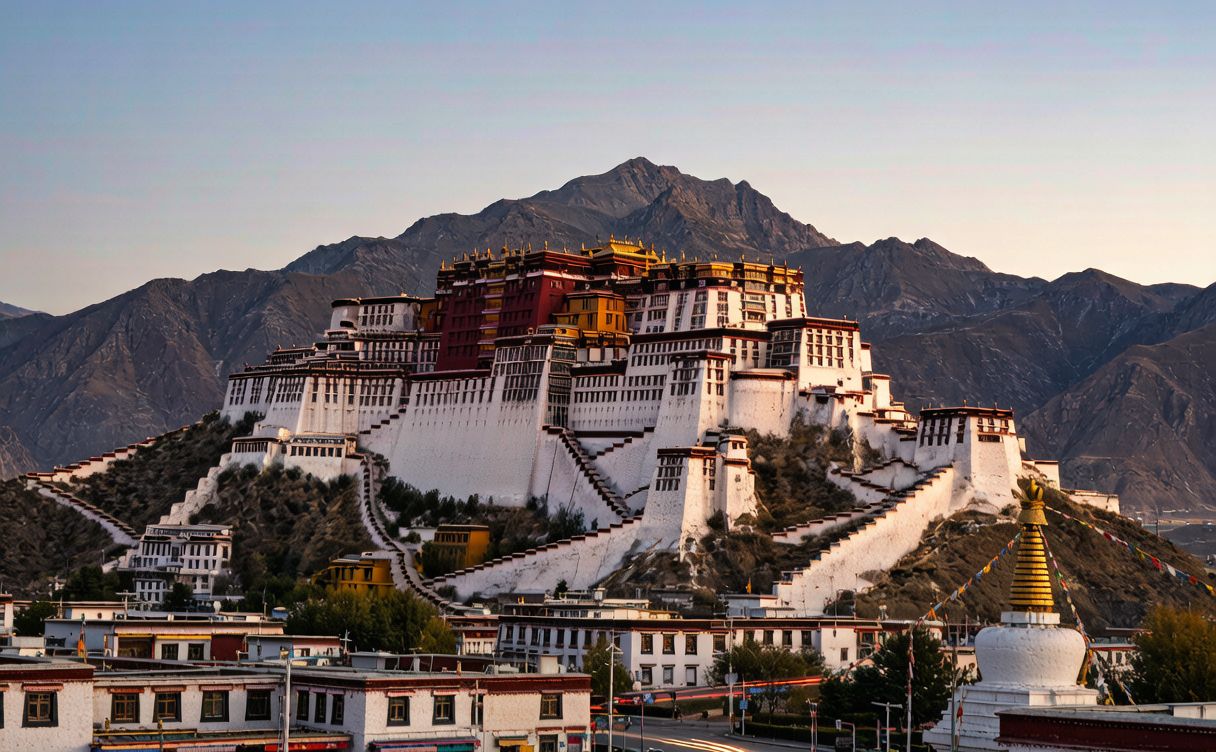
What the Potala Palace Is
Most travelers arrive knowing the Potala Palace looks spectacular but understanding little about what it actually is. Built on Marpo Ri (Red Hill) in the heart of Lhasa, the capital of the Tibet Autonomous Region of China, it served for centuries as the winter palace of the Dalai Lama. The structure you see today was consolidated in the 17th century, though the site has religious significance going back much further.
It’s enormous: over 1,000 rooms, countless chapels, and the golden tombs (stupas) of several Dalai Lamas. In 1994 UNESCO listed it as a World Heritage site, recognizing both its architectural achievement and its role in Tibetan Buddhist culture. You can read the official description on the UNESCO Potala Palace listing, which frames the site within its wider cultural landscape.
What struck me on my first visit was the layering. The White Palace (the administrative and living quarters) sits below the Red Palace (the spiritual heart, full of shrines and tombs). You move upward through both, and the thin air makes the climb feel longer than it is. Knowing that basic structure ahead of time helped me pace myself — and appreciate why the route is one-way and tightly managed.
Tickets & the Timed-Entry System
This is where most foreign visitors get caught out. The Potala Palace does not sell walk-up tickets the way many Chinese attractions do. Entry runs on a strict timed-entry system with a limited daily quota, and during peak season (roughly May to October) it sells out. Plan to book ahead — ideally through an authorized agent or your hotel in Lhasa, who can secure a slot for a specific morning or afternoon window.
As of 2026, the standard high-season ticket is ¥200 (about $28 at ¥1 ≈ $0.14), with a reduced off-season price around ¥100 (about $14). There’s an additional fee if you want to enter the interior chapels of the Red Palace with a guide, which I’d strongly recommend because the artwork and tombs are the real draw. Bring your passport — it’s checked against the booking, and there’s no flexibility on the name.
One more thing worth knowing: visiting Lhasa and the Potala requires the Tibet Travel Permit in addition to your Chinese visa. That permit must be arranged through a licensed Chinese travel agency before you fly in; you cannot simply show up at Lhasa airport on a standard tourist visa and expect entry. Our China tourist visa application guide covers the main visa steps, but for Tibet specifically, budget extra lead time and work with an agency that handles permits.
Altitude & Acclimatization
I can’t overstate this: altitude is the single biggest factor in whether you enjoy the Potala Palace. Lhasa sits at about 3,650 meters (nearly 12,000 feet). At that height there’s roughly a third less oxygen than at sea level, and the palace’s internal staircases are steep and unforgiving.
Here’s what worked for me and the travelers I’ve advised:
- Arrive a day early. Don’t fly into Lhasa and head straight to the Potala. Spend at least one full day resting, hydrating, and walking slowly around the lower city first.
- Go slow on the steps. The entrance ramp alone is a workout. Pause often. Locals climb it daily; you don’t have to prove anything.
- Limit alcohol and heavy meals for the first 48 hours. Your body is already under stress.
- Watch for real symptoms. Mild breathlessness is normal. A pounding headache, nausea, or dizziness that worsens is not — descend or get help.
Most healthy visitors adjust within two or three days. The palace visit itself is short (the timed ticket usually allows roughly an hour inside), so the altitude challenge is really about the approach and the staircases, not endurance.
How to Get There
Lhasa is remote, but it’s far more accessible than many first-time visitors expect. You have two realistic options.
Flying in. The fastest route is a flight from a major Chinese hub. Chengdu is the most popular gateway, with frequent daily flights and the bonus that you can spend a day with the giant pandas beforehand — our Chengdu pandas and city guide lays out how to fit that in. Xi’an is another strong option, and it lets you pair the trip with the Terracotta Army; see our Xi’an Terracotta Warriors visit guide for timing. Either way, flying saves days versus the train and limits how long you spend gaining altitude.
The Qinghai–Tibet railway. This is the romantic choice, and for good reason: the line from Xining to Lhasa is the highest railway on earth, crossing the Tanggula Pass above 5,000 meters. The slow ascent is excellent for acclimatization, and the landscapes are unforgettable. The trade-off is time — it’s a long, high ride, and you’ll still feel Lhasa’s altitude sharply on arrival. Trains are popular with foreign travelers, so book well ahead.
Whichever way you arrive, give yourself buffer days. A missed flight or a permit delay in the Tibet Autonomous Region of China is far more disruptive than the same hiccup elsewhere, simply because everything routes through Lhasa.
What to See Inside
Once you’re in, the route is fixed and one-directional, which actually removes decision fatigue. Highlights I always point people toward:
- The Great West Hall and the main assembly halls, where enormous thangka paintings and golden statues dominate.
- The stupas of past Dalai Lamas in the Red Palace — the tomb of the 5th Dalai Lama is a staggering gold-and-gem structure.
- The Dalai Lama’s former living quarters in the White Palace, with their muted, domestic scale after the grandeur below.
- The rooftop terraces, which offer the best views back across Lhasa and toward the mountains.
Photography is restricted inside the chapels, and the low light means even where it’s allowed, flash is forbidden. I learned to just put the camera down and look. The interior is dim, fragrant with butter lamps, and crowded — go early in your assigned window to beat the worst of the midday crush.
Dress & Etiquette
The Potala is an active religious site, not a museum piece, so dress and behavior matter. Cover shoulders and knees; a lightweight long-sleeve layer is practical anyway given the cool, breezy plateau air. Remove hats indoors, walk clockwise around shrines, and keep your voice low.
A few specifics that caught me off guard the first time: don’t point the soles of your feet at statues or people when you sit, don’t touch murals or relics, and don’t step over anyone seated on the floor. Prostrating pilgrims move through the same spaces — step aside and let them pass rather than weaving through. None of this is complicated, but a little awareness keeps you from being that loud tourist everyone notices.
Combine with Jokhang Temple & Barkhor
The Potala is the headline, but the real spiritual heart of Lhasa is the Jokhang Temple, a short walk east in the old town. Around it winds the Barkhor, a circular pilgrim circuit and market street that’s perfect for soaking up daily life in the Tibet Autonomous Region of China. I’d argue the Barkhor at dawn — full of prostrating devotees and the smell of incense — is the most moving experience in the city, and it costs nothing.
Do the Potala first (it’s the physically hardest), then spend the following morning at Jokhang and wander the Barkhor. The contrast between the fortress-like palace and the intimate, living temple is what makes a Lhasa visit feel complete rather than like a checkbox.
The Bottom Line
Seeing the Potala Palace Lhasa rewards preparation more than almost any other stop in China. Lock in your timed ticket and Tibet permit before you fly, give your body two or three days to meet the altitude, and pace the climb. Pair it with Jokhang and the Barkhor and you’ll leave understanding why this plateau city, in the Tibet Autonomous Region of China, sits so firmly on travelers’ bucket lists. It’s demanding, yes — but the first glimpse of those red-and-white walls against a deep blue sky is one I still think about.
Written by Karl — last updated July 2026. Karl has spent three years helping foreign visitors plan low-stress trips across China.