

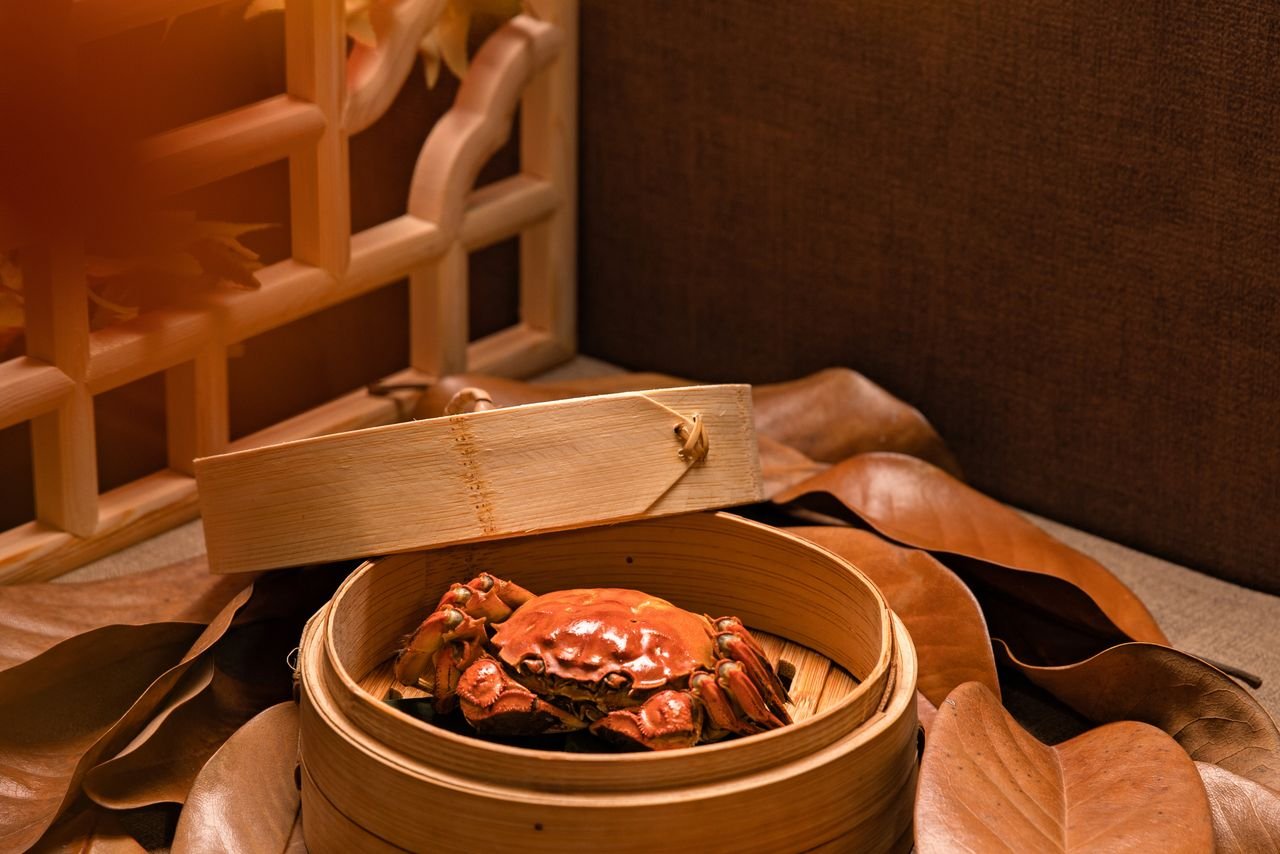
I still remember my first Shanghai hairy crab dinner. I watched the person next to me crack the shell with a small hammer, pull out the orange roe and nod, while I sat there with a fork and no idea what I was supposed to do. Eight autumns later I have eaten them in banquet rooms, neighbourhood restaurants and once on a plastic stool outside a market stall. This guide is what I wish someone had told me that first evening: when the season really runs, what to order, and what a crab should cost in 2026.
When is Shanghai hairy crab season?
The short answer is mid-September through late November. The Shanghai hairy crab season actually follows the lunar calendar: good crabs arrive around the 18th day of the eighth lunar month and continue into the eleventh lunar month. The solar dates shift each year, so check the lunar date before booking around it.
Early season, peak season, late season
Early-season crabs, from roughly mid-September, are smaller and the roe is still developing. Locals call these “six-grain” crabs and they are cheaper. The best time for hairy crab is generally October and early November, when the female roe is dense and the male paste is thick and creamy. By late November the crabs are large but the texture softens, and prices often fall again. If you can only pick one week, aim for the second half of October.
| Period | What to expect | Typical quality | Price trend |
|---|---|---|---|
| Mid to late September | First harvest, smaller crabs | Lighter roe, firm meat | Lower, then rising |
| Early to mid October | Main harvest begins | Good roe, improving paste | High |
| Late October to mid November | Peak of the season | Densest roe and paste | Highest |
| Late November | Last of the catch | Larger but softer | Falling |
Yangcheng Lake versus Taihu: does the label matter?
Walk into any restaurant in Shanghai in October and you will see the words “Yangcheng Lake” on the menu. Yangcheng Lake, in Suzhou, is the most famous source, with a protected geographical indication and a reputation built over centuries. Taihu, the huge lake west of Shanghai and Wuxi, produces excellent crabs too, often at a friendlier price. Both are genuine, but the label is widely borrowed: plenty of crabs sold as Yangcheng Lake come from elsewhere, and even a real one may be farm-raised rather than wild.
My approach is to treat the origin as a starting point, not a guarantee. Ask the restaurant when the crabs arrived and whether they will show you the live tank. A place willing to let you pick your own crab is usually more honest than one that brings a covered plate to the table. For more background on the species, the lakes and the difference between wild and farmed, I have written a complete hairy crab guide that goes deeper than a menu can.
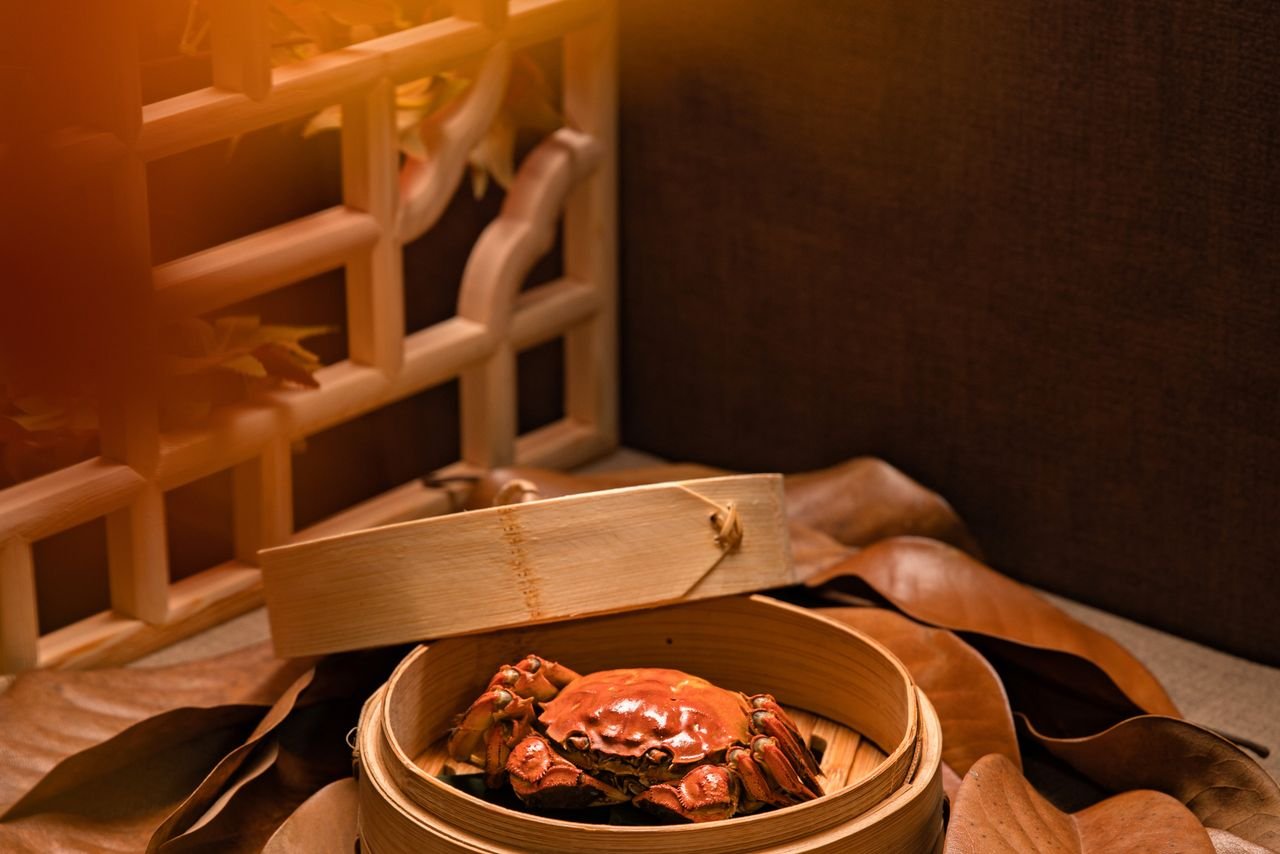
How to eat a hairy crab, step by step
There is a right order, and following it makes the meal far more enjoyable. Watch one person do it once and you will never be puzzled again.
- Peel off the legs and claws first. Snap them at the joints and pull the meat out with your teeth or a small pick. Do this while the crab is still warm.
- Lift the shell. Insert a knife or the edge of a spoon under the top shell and twist. The golden roe in the female, or the creamy paste in the male, sits just beneath it.
- Remove the gills and stomach. The grey feathery gills and the small stomach sac are not eaten. Discard them neatly.
- Spoon out the roe or paste. This is the richest part. Take it slowly; a little ginger vinegar cuts the richness.
- Break the body in half and pick out the meat from the chambers with a pick or a chopstick.
- Dip sparingly. Black vinegar with shredded ginger is usual; too much drowns the flavour you paid for.
Take your time. A crab is a slow meal, and rushing it is the fastest way to spend two hundred yuan without tasting anything. Restaurants will bring a finger bowl with warm water and a slice of lemon; use it.
What to order besides the crab
A hairy crab dinner is not just a plate of crab. Most Shanghai restaurants build a small set around it: cold soy-marinated crab, crab roe tofu, crab meat with winter melon, and a bowl of noodles at the end. If you have room, order the crab roe powder over noodles — it is the dish I now look forward to more than the crab itself. Autumn also brings braised pork and river shrimp, both of which sit comfortably alongside a crab feast.
If your China itinerary continues north, note that this is a distinctly eastern autumn dish. My Beijing food guide covers the capital’s own cold-weather favourite, Peking duck, and the two make an interesting comparison in how a city turns one ingredient into a ritual.
Where locals actually eat hairy crab Shanghai style
The city has three useful options. Old established restaurants near the Bund and along Nanjing Road offer polished service and set menus, with English-speaking staff and reliable standards; these are the easiest choice for a first dinner. Neighbourhood restaurants in the former French Concession and around the old city are where Shanghai families go, often with a live tank by the entrance and a much shorter menu. Finally, specialty crab shops focus on takeaway and simple counter seating, where you pay by weight and eat with plastic gloves.
I have eaten well in all three. For a first visit I would choose a mid-range neighbourhood restaurant: ask the price per crab before you sit down, confirm whether it is by the piece or by the tael, and check if there is a minimum order. After dinner, a walk along the Shanghai Bund at night is the natural way to end the evening — the river breeze and the lit skyline suit a slow, rich meal better than a rushed one.
What it costs in 2026
Prices move with size, sex and the calendar. These are the ranges I have seen in Shanghai as of 2026, per crab:
| Where you eat | Price per crab | What you get |
|---|---|---|
| Market stall or specialty counter | ¥50–¥90 | Small to medium crab, basic seating, self-service |
| Neighbourhood restaurant | ¥100–¥180 | Medium to large crab, table service, ginger vinegar |
| Established mid-range restaurant | ¥180–¥260 | Large crab, set menu, English menu available |
| High-end or banquet setting | ¥260–¥300+ | Premium size, full crab menu, formal service |
Females with heavy roe usually cost more than males of the same size in October, while in November the larger males often take the premium. Ask for the price by the piece, not by the jin, unless you can read the scale. A whole dinner with a crab, two side dishes and tea typically runs ¥200–¥400 per person in a neighbourhood restaurant.
A few lessons from eating them badly
- Order one crab first. See the size and quality before you commit to two or three.
- Check the crab is alive. A lively crab that moves when touched is the baseline, not a bonus.
- Do not eat the gills. They are the part most likely to taste muddy and they are not meant to be eaten.
- Keep the mess contained. Crab is eaten with the hands; restaurants expect it, but a wet wipe on your lap helps.
- Apply the same caution you would anywhere. If you are trying a stall, the hygiene rules are the same as eating street food safely in China: choose a busy place with high turnover and food cooked or steamed in front of you.
The season is short and the best weeks are crowded. Book a table for early evening in late October, leave room in the meal for the noodles at the end, and give yourself an unhurried night. Crab eaten in a hurry is just an expensive snack; crab eaten slowly, with the roe spooned out before the meat, is one of the better reasons to visit Shanghai in autumn.
Written by Karl Huang, a food and travel writer who has covered regional Chinese cuisine and independent travel for over a decade.