

The dish that arrives already bubbling
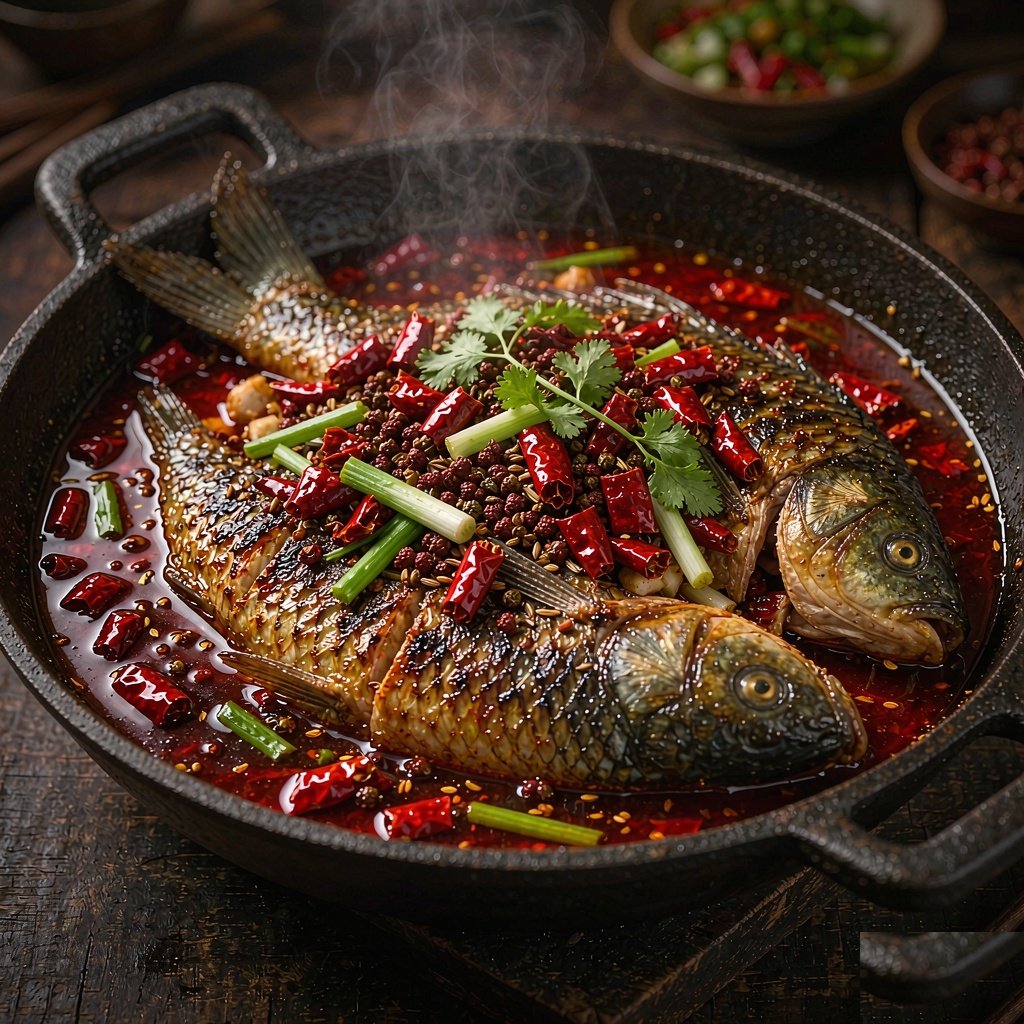
My first real encounter with Chongqing grilled fish came on a humid riverside night, when a friend waved off the hot pot menu and told the waiter, simply, “one grilled fish.” What landed on our table was not a clean fillet off a backyard grill. It was a heavy black iron pan riding its own little gas burner, a whole fish half-submerged in a violently red broth of chili oil, Sichuan peppercorns, cumin and scallions, still hissing as it simmered in front of us. That gap between the name and the reality is the first thing you need to understand: kao yu is “grilled fish” in name, but the eating is a braise.
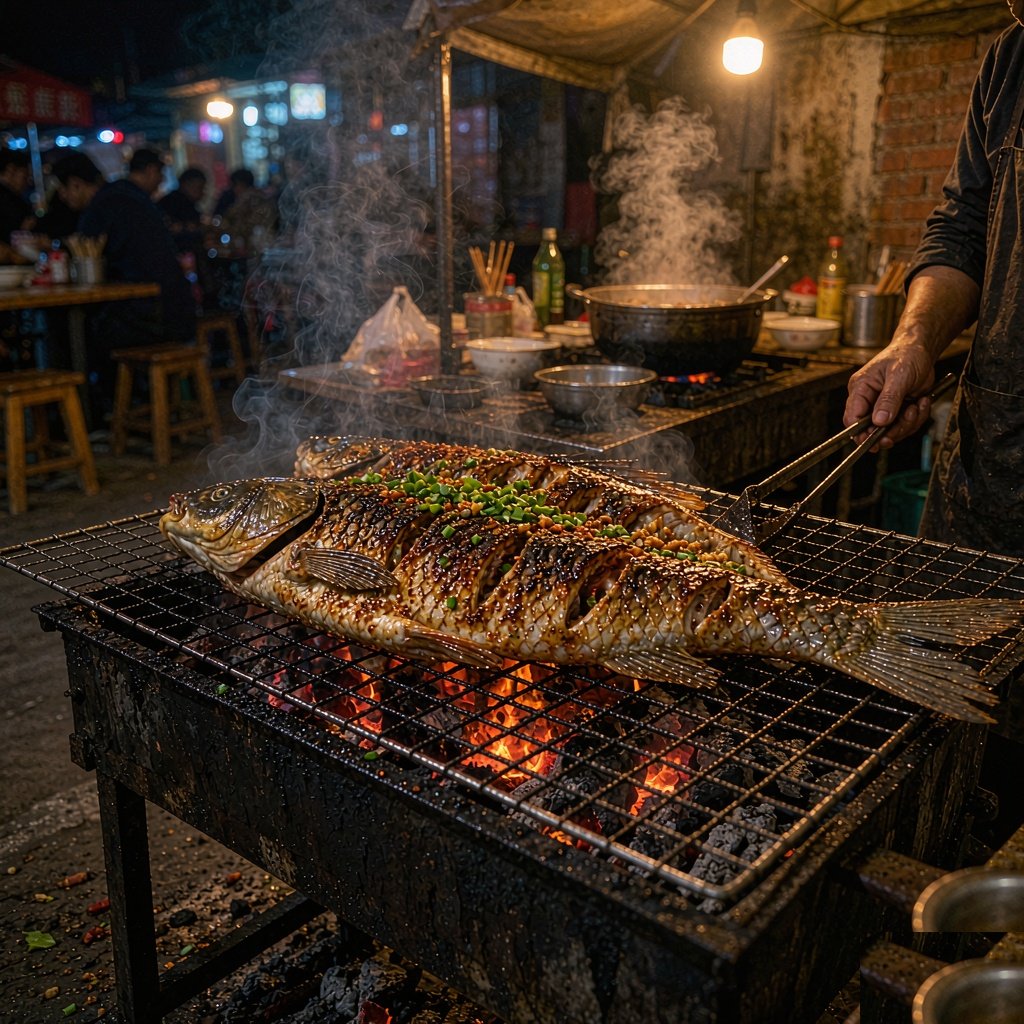
The fish is indeed grilled or charred first, but only to lay down a smoky, crisp skin. Then it gets transferred into a shallow pan of aromatics and chili oil and finished at the table over a live flame. So you get the best of two worlds — the char of the grill and the slow, penetrating heat of a stew — in one communal dish. In Chongqing’s everyday food culture, this is comfort food with attitude, the kind of thing ordered after midnight as easily as at noon.
What Chongqing grilled fish tastes like
If you have eaten Sichuan food, you know the word mala — numbing and spicy. Kao yu leads with that, but it is more layered than a straight chili hit. The first sensation is the tingle of huajiao (Sichuan peppercorn) across the lips, followed by the slow burn of dried chilies and the savory depth of fermented bean paste and cumin. Underneath all that, the fish itself stays moist and flaky because the braise protects it.
The texture is the surprise for first-timers. The skin, where it crisped on the grill, turns almost lacquered in the oil; the flesh pulls apart in clean white ribbons. Vegetables and toppings cooked down in the same pan — potato slices, celery, bean sprouts, tofu — soak up the seasoning and become, for many people, the best part of the bowl. It is loud, aromatic food that fills the room with the smell of toasted cumin and charred fish skin before you have taken a bite.
Choosing the fish
The most authentic versions use a whole freshwater fish, and in Chongqing that usually means grass carp (cao yu) or carp. These are bony fish, which is part of the traditional experience — you pick around the spine and enjoy the sweet, firm flesh. For a home cook who would rather not fight bones, catfish (nian yu) or tilapia work beautifully because they are mild and easy to fillet. A 1.2 to 1.5 kilogram fish, or the equivalent in fillets, serves two to three people.
Whichever you choose, ask the fishmonger to clean and butterfly it, or split it open so it lies flat. A flat fish grills evenly and braises quickly. If you are using fillets, score the skin side two or three times so the heat and marinade penetrate.
Core ingredients with amounts
This is a flexible dish, but the backbone of the seasoning does not change much. The amounts below are for one medium fish feeding two to three.
- 1 whole fish (about 1.3 kg) or 600 g fillets, cleaned and scored
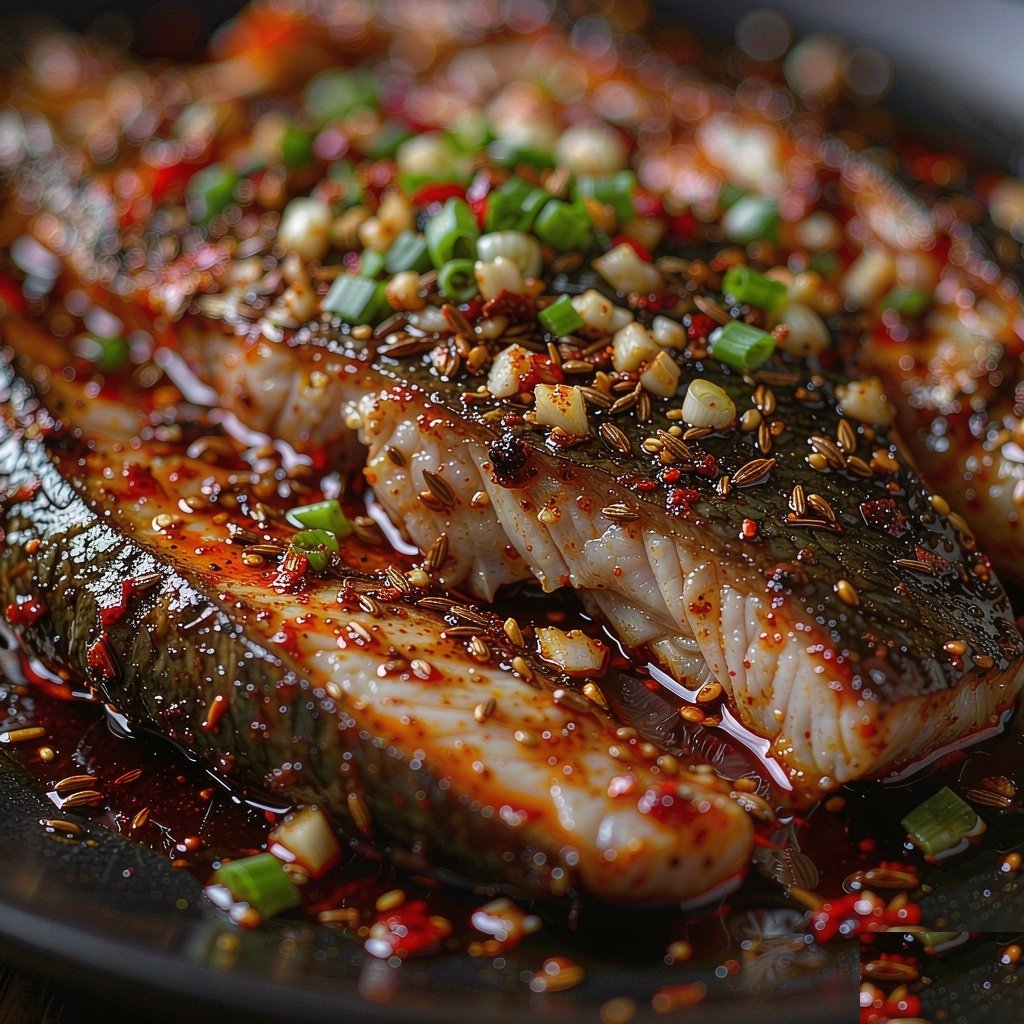
- 2 tablespoons cumin seeds, lightly crushed
- 12–15 dried red chilies, snapped in half
- 1 tablespoon Sichuan peppercorns (huajiao)
- 3 tablespoons doubanjiang (fermented chili bean paste)
- 1 tablespoon sweet fermented bean paste (tianmianjiang), optional for roundness
- 4 cloves garlic, sliced
- 1 thumb of ginger, sliced
- 1 large onion, cut in wedges
- 2 spring onions, cut in short lengths
- 200 ml neutral oil (for the braise base)
- 150 ml stock or water
- 1 tablespoon light soy sauce
- 1 teaspoon sugar
- Toppings: 1 potato (sliced thin), a handful of celery, bean sprouts, and firm tofu
The cumin is not optional in spirit — it is what separates this from a generic spicy fish stew and gives kao yu its roadside, riverside character. Toast the cumin in a dry pan for thirty seconds before crushing it; the difference in aroma is enormous.
How to make Chongqing grilled fish at home
The method looks long only because it has two stages. Once you have done it once, the rhythm is simple: char the fish, build the braise, finish together.
Step 1 — Marinate and dry the fish
Rub the fish with a little salt, cooking wine and a dusting of five-spice. Let it sit twenty minutes, then pat it completely dry. Dry skin is what lets it char instead of steam.
Step 2 — Grill or char the fish
Brush the fish with oil and grill it over high heat — a grill pan, an outdoor grill, or even a broiler — until the skin is blistered and lightly blackened, about three to four minutes per side. You are not cooking it through, only building color and smoke. Set it aside.
Step 3 — Build the chili-oil base
In a heavy shallow pan, heat the oil and gently fry the garlic, ginger, dried chilies, Sichuan peppercorns and cumin until fragrant, about one minute. Stir in the doubanjiang and cook it until the oil turns red and glossy. Add the onion, soy, sugar and stock, and bring it to a simmer.
Step 4 — Braise the fish in the pan
Lay the charred fish into the pan, spoon the sauce over it, and let it bubble gently for six to eight minutes. If you are using fillets, four to five minutes is enough. The fish should be just cooked through and suffused with the seasoning.
Step 5 — Add the toppings
Tuck the potato, celery, tofu and bean sprouts around the fish. Cover and simmer another three minutes so the vegetables soften and drink up the broth. Scatter spring onions on top.
Step 6 — Serve over a burner
Carry the pan to the table over its burner or a portable flame. Keep it at a low simmer so it stays hot and keeps developing flavor as you eat. This is the part that turns a home version into something that feels like Chongqing.
Practical tips that actually matter
- Do not skip drying the fish. Moisture is the enemy of the char.
- Control the heat under the serving burner. A furious boil throws the oil around and overcooks the fish; a gentle simmer is the goal.
- Make the chili base ahead. It keeps in the fridge for a week and turns a weeknight into a ten-minute dinner.
- If you dislike bones, fillet the fish yourself or buy fillets; the dish loses nothing essential.
- Taste the base before the fish goes in. This is your only chance to adjust salt and heat, because once the fish is braising you are locked in.
Regional twists and flavor schools
Chongqing kao yu belongs to the broader jianghu (literally “rivers and lakes”) style of Sichuan cooking — rustic, bold, unapologetic. Within that, you will find a few common variations. The classic is numb-spicy (mala), but many shops offer a pickled-vegetable (suan cai) version that is tangy and lighter, or a “griddle” style where the fish is dry-cooked with even more cumin and chili rather than submerged in oil. In tourist areas you will also see a tomato or black-bean option for people who cannot handle heat.
The toppings are where families make it their own. Potato slices and celery are near-universal; tofu, lotus root, enoki mushrooms and wide noodles are common additions. Ordering extra toppings to cook in the broth is normal, and it is one reason the dish stretches to feed a table.
Who it’s for, and who should order something else
Kao yu is for people who like bold, aromatic food and do not mind getting their hands busy with bones. It is a sociable, shared dish that pairs perfectly with plain rice and cold beer. It is also a strong choice for travelers who want the thrill of Sichuan flavor without the all-out intensity of a full Chongqing hot pot session, because you can moderate the heat by scraping off chilies.
On the other hand, people with a very low spice tolerance, a sensitivity to Sichuan peppercorn numbness, or a strict low-sodium diet should approach with caution — the broth is salty and fiery by design. Those avoiding purines should note that the simmering broth concentrates compounds from the fish, so a plain steamed fish from a Chinese seafood restaurant may be the wiser order. Children and cautious eaters often do better with the pickled-vegetable version, which keeps the cumin character with far less burn.
Where to eat it and how it compares
In Chongqing the dish is everywhere — from hole-in-the-wall neighborhoods to glitzy riverside restaurants — and the quality is generally high because the technique is local. Look for places where the fish is grilled to order rather than pre-cooked, and do not be shy about asking which fish is freshest that day. It makes a great alternative evening to hot pot when you want something a little less communal and a little more about the fish itself.
People often confuse kao yu with shui zhu yu, the boiled fish in chili oil, but they are different dishes: shui zhu yu is poached fish in a sheer sea of oil with no grill step, while kao yu carries the char and is eaten from a braising pan. Both are worth knowing if you are exploring Sichuan seafood cooking.
Frequently asked questions
What does Chongqing grilled fish taste like?
It tastes numbing, spicy and deeply aromatic, with cumin and charred fish skin leading the flavor and a tender, moist flesh underneath. The broth is savory rather than sweet, and the toppings pick up most of that seasoning.
What fish is best for Chongqing grilled fish?
Traditionally grass carp or carp, but catfish and tilapia are excellent, milder, boneless-friendly choices for home cooking. The key is a fish that stays moist under braising.
How to make Chongqing grilled fish at home?
Char the fish on a grill or broiler, then braise it in a shallow pan of chili-oil base built from doubanjiang, cumin, dried chilies and Sichuan peppercorns, finishing the toppings at the table over a low flame. The full numbered method is above.
Is Chongqing grilled fish very spicy?
The classic mala version is spicy and numbing, but most restaurants offer a pickled-vegetable or tomato alternative, and you can scrape away chilies at home to tame the heat.
Chongqing grilled fish vs hot pot: which should I order?
Hot pot is a longer, more interactive meal built around dipping many ingredients; grilled fish is a single centered dish focused on one beautifully seasoned fish, quicker and less intense. Both are Chongqing icons.
How many calories are in Chongqing grilled fish?
A typical restaurant portion shared between two runs roughly 500 to 700 calories per person once you count the oil-rich broth and toppings, though a home version with less oil and more vegetables lands noticeably lower.