

Beijing is huge — 16 districts, ring roads that spiral outward for 100 km, and a subway system that can drop you 40 minutes from where you actually want to be. The single biggest mistake first-time visitors make is booking the cheapest room without checking which side of the city it sits on. I’ve watched friends save $15 a night and lose two hours a day to commuting. This guide walks through the neighborhoods that actually work for travelers, what each one costs, and how to lock in a good room. You can book a Beijing hotel in Wangfujing or any of the areas below on the same platform you’ll use for trains and flights — one login, one cancellation policy to learn.

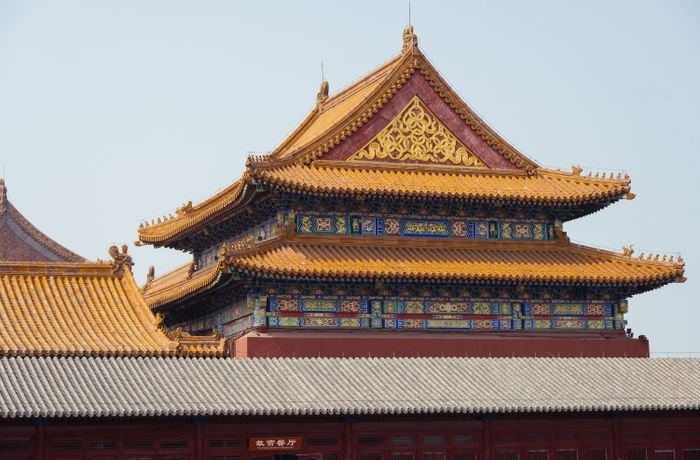
Wangfujing & the Forbidden City core — best for first-timers
If this is your first trip, stay within walking distance of the Forbidden City. Wangfujing is the obvious hub: a real subway interchange (Lines 1 and 8), department stores, and a night food market that’s touristy but fun. You’ll pay more, but you’ll also roll out of bed and be at the palace gates before the tour buses. Rooms here run $55–$120 a night depending on whether you want a Western-chain high-rise or a smaller Chinese business hotel.
Sanlitun — best for nightlife and shopping
Sanlitun is Beijing’s party district, centered on the Taikoo Li open-air mall. Bars, rooftop lounges, and the city’s best international dining are all here. It suits younger travelers and anyone who wants the evening to be part of the trip. The trade-off: it’s north of the old core, so a Forbidden City morning means a 25-minute subway ride. Prices land around $50–$110. If you’re traveling with friends who want to stay out late, book a Beijing hotel in Sanlitun and you won’t regret the short walk back to your room.
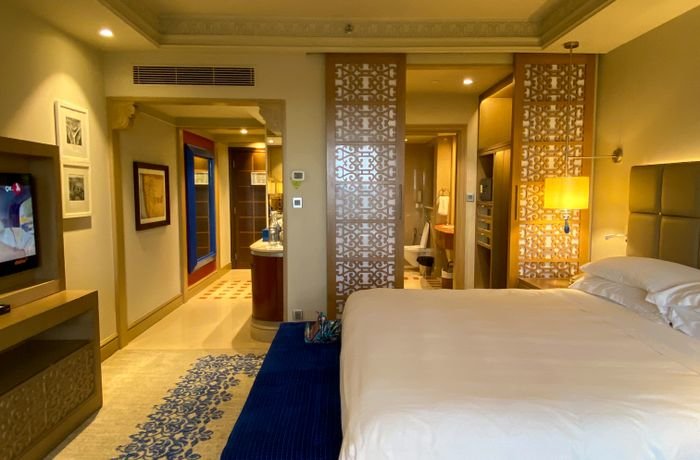
Nanluoguxiang and the hutongs — best for character
The hutongs are the old courtyard lanes that predate modern Beijing, and staying in one is the closest you’ll get to living the city rather than photographing it. Nanluoguxiang is the famous one (now a bit commercial), but the lanes branching off it — like Dongsi or Beiluoguxiang — have quiet courtyard hotels (siheyuan) with heated floors and minimalist rooms. Expect $40–$90 a night. To wake up in a converted courtyard rather than a tower, book a Beijing hotel in the hutongs and filter for “courtyard” in the listing.
Guomao / CBD — best for business and expo trips
Guomao is the glass-tower heart of Beijing’s business district, wrapped around the China World Trade Center and the CCTV headquarters. If you’re here for a conference at the National Convention Center or meetings in the CBD, this is where you want to be — $70–$120 gets you a polished international-chain room with reliable WiFi and a gym. It’s less atmospheric, but nobody comes to Guomao for charm.
Near Beijing Railway Station — best transit hub
Beijing has several stations; the central Beijing Railway Station (Beijing Zhan) serves classic overnight sleeper trains to places like Shanghai and Xi’an. Staying nearby (the Chongwenmen area) means you can roll off a train and into bed in ten minutes. Rooms are functional rather than pretty, $30–$70. Good for budget travelers doing a multi-city rail loop — pair it with the neighborhood advice in our China neighborhood guide by city.
Near PEK or PKX airport — best for late flights
Beijing has two airports: Capital (PEK) in the northeast and Daxing (PKX) far south. If you land at midnight or fly out at 7 a.m., an airport hotel saves a brutal pre-dawn taxi. Expect $35–$80 for a clean, quiet room with a shuttle. It’s isolated — fine for one night, miserable for a whole trip. For the full booking playbook, see our first-timer’s guide to booking hotels in China.
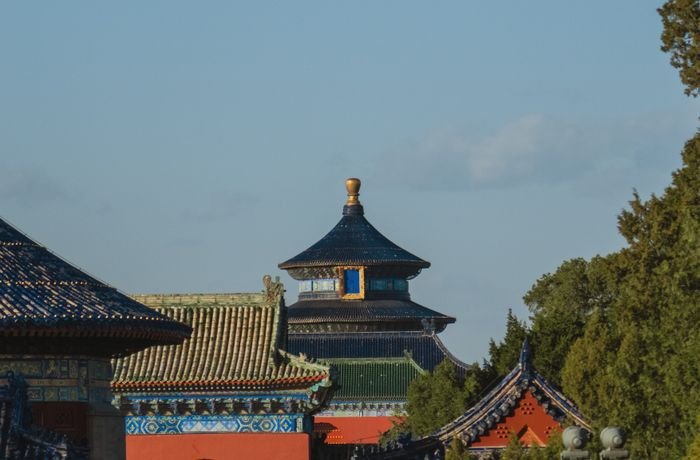
Best neighborhoods at a glance
| Area | Who it suits | Vibe | Approx $/night |
|---|---|---|---|
| Wangfujing / Forbidden City core | First-timers, sightseers | Grand, central, walk to palaces | $55–$120 |
| Sanlitun | Nightlife, shoppers, younger travelers | Loud, trendy, bar-heavy | $50–$110 |
| Nanluoguxiang hutongs | Couples, character-seekers | Courtyard lanes, quiet charm | $40–$90 |
| Guomao / CBD | Business, expo visitors | Sleek towers, corporate | $70–$120 |
| Near Beijing Railway Station | Transit-hoppers, budget | Functional, convenient | $30–$70 |
| Near PEK / PKX airport | Late flights, long layovers | Isolated, practical | $35–$80 |
Practical booking tips
- Book 3–6 weeks out for spring and autumn. Beijing’s peak is April–May and September–October; rooms near the Forbidden City sell out and prices climb 30–40%.
- Check the subway line, not just the district name. “Chaoyang” covers half the city. Confirm you’re near Lines 1, 2, 5, or 10.
- Read recent reviews for heating. Beijing winters hit -10°C; older buildings with weak radiators are miserable in January.
- Use one platform for everything. When you book a Beijing hotel near the Forbidden City on the same app you use for trains, your itinerary stays in one place and cancellations are easier to manage.
- Confirm the hotel’s English signage. Many mid-range places have tiny English on their entrance — screenshot the Chinese name and address to show your taxi driver.
- Save the hotel pin in an offline maps app. Beijing’s scale means a wrong turn near the 3rd Ring can add 20 minutes, and mobile data drops inside the deeper subway stations.
Mistakes to avoid
- Booking “Beijing” without the district. A $25 room might be in Tongzhou, an hour from everything you came to see.
- Ignoring the ring-road math. Inside the 2nd Ring Road = old core. The 5th Ring and out = suburbs. The further out, the cheaper and more isolated.
- Assuming walkability. Beijing blocks are enormous. A “15-minute walk” on the map can be 35 minutes in reality.
- Skipping the deposit. Some hotels pre-authorize a refundable deposit on arrival; bring a card that works internationally.
- Forgetting ID rules. Mainland China requires every guest to show a passport at check-in — no exceptions, even for a partner waiting in the lobby.
Frequently asked questions
Is it better to stay inside or outside the 2nd Ring Road?
For a first visit, inside the 2nd Ring Road puts you near the Forbidden City, Tiananmen, and the hutongs. You’ll pay more but save hours daily. Outside the ring works only if you’re on a tight budget and don’t mind long subway rides.
Which Beijing area is safest for solo travelers?
All central districts are safe. Wangfujing and the hutongs are well-lit and busy into the evening. The main risk is pickpockets in crowded night markets, not personal safety.
Can I walk to the Great Wall from these neighborhoods?
No. The nearest sections (Mutianyu, Badaling) are 1.5–2 hours away. Stay central and book a day trip or private transfer; don’t pick a hotel based on “proximity” to the Wall.
Should I book a hutong courtyard or a high-rise?
Courtyards win on character but can be noisy (thin walls, lane traffic) and lack elevators. High-rises win on consistency and amenities. If you’re over 60 or hate stairs, pick the tower.
Do Beijing hotels include breakfast?
Mid-range and up usually include a buffet (often heavy on congee, dumplings, and eggs). Budget places often don’t — check the “what’s included” line before booking.
Is it worth staying near the airport for an early flight?
Only if your departure is before 8 a.m. or after 10 p.m. Otherwise, central Beijing is 40–50 minutes from PEK by express train or taxi, and the city is far more fun to wake up in.