

China’s 144-hour visa-free transit policy lets passport holders from dozens of countries spend up to six days in the country without applying for a visa — as long as you’re genuinely in transit to a third destination. The part that trips people up isn’t the rule itself, it’s the paperwork at the immigration desk. Officers want to see a confirmed onward flight and, in many cities, a hotel reservation that proves you have a plan. The easiest way I’ve found to assemble that paper trail is to book your China flights and onward ticket on one platform so the dates and names match exactly what’s printed in your passport.

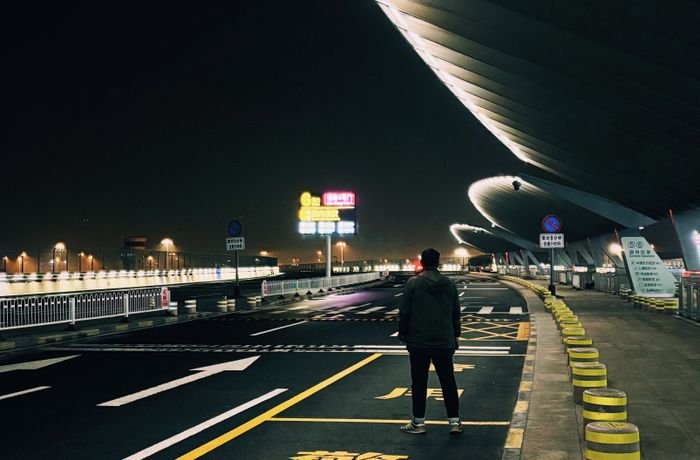
Which airports and countries actually qualify
The policy is open to citizens of 53 countries, including the United States, United Kingdom, Canada, Australia, New Zealand, all Schengen states, Japan, South Korea, and Singapore. The catch is that you can only enter and leave through designated ports, and each port is tied to a specific geographic zone you’re allowed to roam during your stay.
A few of the busiest eligible hubs:
| Eligible hub | Stay zone | Highlight |
|---|---|---|
| Beijing (PEK & PKX) | Beijing, Tianjin, Hebei | Great Wall and Forbidden City within reach |
| Shanghai (PVG & SHA) | Shanghai, Jiangsu, Zhejiang | Yu Garden, the Bund, easy train to Hangzhou |
| Xi’an (XIY) | Shaanxi province | Terracotta Warriors, 30 minutes from the city |
| Chengdu (TFU) | Chengdu area | Giant pandas at the Breeding Research Base |
| Guangzhou (CAN) | Guangdong province | Cantonese food and the Pearl River night cruise |
Important detail: your inbound and outbound flights must be to two different countries or regions, and mainland China can’t be your start or end point. Flying London → Beijing → Tokyo qualifies; London → Beijing → London does not. The third destination can be Hong Kong, Macau, or Taiwan — those count as separate regions for this rule.
How the 144-hour clock really works
The 144 hours are not counted from the moment you land. They begin at 00:00 (midnight) on the day after you enter. Land at 11 p.m. on a Monday and your clock starts Tuesday at midnight, giving you until Sunday at midnight — closer to six and a half days than six flat. Use that buffer when you book your outbound flight, but don’t cut it to the final hour in case of delays.
You also must depart from an eligible port within the same stay zone. A Beijing entry paired with a Shanghai exit is allowed under the wider regional arrangement for some routes, but don’t assume — check the specific paired ports before you book, because a wrong exit airport can void the transit permission on the spot.
The documents you must show at the desk
Bring these, printed and saved offline on your phone:
- A passport valid for at least six months with a blank visa page.
- A confirmed onward ticket leaving China within 144 hours to a third country or region.
- A completed Temporary Entry Card (handed out on the flight or at the desk).
- A hotel booking that covers every night of your stay — officers in Shanghai and Beijing often ask for it.
- Proof of where you’ll be, such as a tour confirmation or the address of your accommodation.
The onward ticket is the one they scrutinize hardest. A hold or a screenshot from a booking site is usually fine, but a fully ticketed, paid reservation removes any doubt. This is exactly why I reserve a Beijing hotel near the Forbidden City and the outbound flight together — the names and dates are already aligned when I reach the counter.
What actually happens at the immigration desk
When you reach Beijing or Shanghai, join the line marked for “24/72/144-hour transit” rather than the standard visa queue. Hand over your passport, the completed entry card, your onward ticket, and your hotel confirmation. The officer may ask a couple of questions — where you’re staying, your next flight, how long you’ll be in the zone. Your answers should match your documents exactly. They’ll stamp a temporary entry permit into your passport, usually valid for the full 144 hours, and you walk through. The whole thing is calm when your paperwork lines up; the delays happen when names don’t match or the onward ticket looks unfinished.
Booking your hotel and flight as proof of itinerary
Think of the booking as your application. The officer is verifying three things: you’re entering, you have a place to stay, and you’re leaving. When all three come from one confirmation trail, the conversation is two minutes instead of twenty.
Practical steps:
- Lock in your inbound flight to an eligible hub (Beijing or Shanghai are the safest for first-timers).
- Book the outbound flight to a third country before you fly — same platform, same name spelling as the passport.
- Add a hotel for every night, ideally with free cancellation in case your plans shift.
- Save PDFs of all three confirmations in an offline folder on your phone.
If your layover is longer than a day, pair this with a guided half-day trip — our guide on turning a long China transit into a real trip walks through the best city tours. And if you’re still deciding when to fly, our 2026 guide to cheap flights into China breaks down the shoulder seasons when fares drop.
A simple sample Beijing layover
Say you land at Beijing Daxing (PKX) on a Friday night and fly out to Seoul the following Thursday. That’s comfortably inside 144 hours. You could spend Saturday at the Forbidden City, Sunday on the Mutianyu stretch of the Great Wall, and still have a relaxed Monday before your evening flight. Book the hotel near Wangfujing or Qianmen so you’re a short subway ride from both the sights and the airport express line.
For first-timers, our first-timer’s hotel booking guide for China explains which areas keep you close to the metro and away from the noisy ring roads.
Mistakes to avoid
- Booking a round-trip that touches only China both ways. You need a genuine third-country onward leg to qualify.
- Assuming every city qualifies. You can only enter through listed ports; flying into a smaller airport on a cheap fare can get you turned away.
- Leaving the stay zone. A Beijing transit permit does not let you hop a train to Shanghai on a whim.
- Forgetting the hotel proof. Even if a city doesn’t strictly require it, having it speeds everything up.
- Miscounting the clock. It starts the day after arrival, not at landing — but don’t cut it to the final hour in case of delay.
- Typing your name differently than the passport. A mismatch between ticket, hotel, and passport is the fastest way to a long desk conversation.
Frequently asked questions
Can I use the 144-hour transit twice in one trip?
Yes, as long as each entry meets the rules — a third-country connection between them. London → Beijing → Tokyo → Shanghai → London works if the Shanghai leg also has a confirmed onward ticket.
Do I need a printed hotel booking?
Not always, but officers in Beijing and Shanghai frequently ask. A saved PDF on your phone plus an offline copy removes the risk of a dead battery or no signal at the desk.
What if my outbound flight is delayed past 144 hours?
Build a buffer. If you’re delayed through no fault of your own, go to the immigration desk immediately — but the safest move is booking a flight with margin rather than landing at hour 143.
Can I travel between Beijing and Tianjin on the transit permit?
Yes. The Beijing permit covers Beijing, Tianjin, and Hebei, so a high-speed train to Tianjin for a day trip is allowed.
Is the onward ticket enough, or do I need a visa too?
For eligible countries the transit permit replaces the visa for that stay. You don’t need a separate Chinese visa if you meet every condition.
Does the policy cost anything?
The transit permit itself is free. You only pay for your flights, hotel, and any tours you book.