

China’s high-speed rail is the fastest way between its cities once you count airport time: 350 km/h cruising speed, minute-level punctuality, and stations in the city center rather than 40 kilometers out. The only real obstacle is booking as a foreigner, because every ticket is tied to a passport through a real-name system built around Chinese ID cards. Book through an English platform, enter your passport once, and the friction disappears.

Why the Train Beats the Plane on Most City Pairs
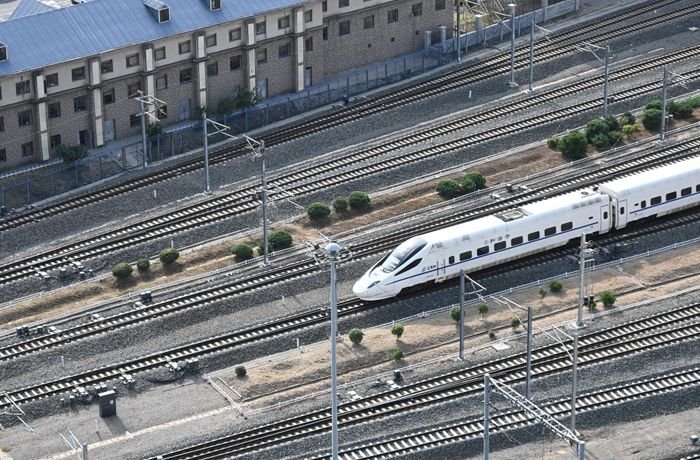
The CRH network connects more than 2,000 stations. Beijing to Xi’an is about four and a half hours; Beijing to Shanghai about four and a half; Chengdu to Chongqing 62 to 77 minutes depending on the service; Guangzhou to Hong Kong under an hour. Because the stations sit downtown, door-to-door time usually beats flying on anything under about 1,200 kilometers.
Trains also run in almost any weather and are rarely cancelled, which is why they are the dependable backbone of an itinerary rather than the risky option. The trade-off is that popular routes sell out in holiday windows, and the cheap seats go first.
What Your Ticket Actually Buys
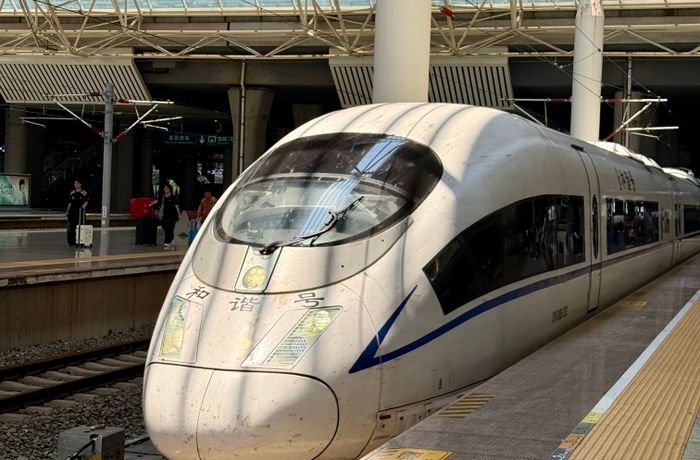
Four classes matter to visitors. Second class is the default: 3+2 seating, reclining, with a table and power at every pair of seats. First is 2+2, wider and quieter. Business is 1+2 or lie-flat on newer trains. Sleeper classes exist only on overnight D- and Z-trains, not daytime G-trains.
| Class | Layout | Approx. fare per 1,000 km | Worth it when |
|---|---|---|---|
| Second class | 3+2, 5 abreast | 450–520 CNY | Almost always — the value pick |
| First class | 2+2, 4 abreast | 750–850 CNY | Legs over 5 hours, or working on board |
| Business class | 1+2, lie-flat on some trains | 1,450–1,600 CNY | Long legs, or a treat on the Shanghai–Beijing line |
| Soft sleeper (overnight only) | 4-berth compartment | 600–750 CNY | Saving a hotel night on a long overnight run |
Which class should I book for a four-hour trip?
Second class, without hesitation. Four hours is two films and a nap; the seat reclines, the aisle is walkable, and the saving over first class is roughly 300 CNY per person — a night’s hotel in Xi’an. Book first class only if you are over 1.9 meters tall, traveling with a laptop and calls to make, or the difference is under 100 CNY.
Is second class crowded or uncomfortable?
Full, not crowded, which is a different thing. Load factors are high, so the car will be busy, but legroom matches economy plus and the overhead racks take a standard carry-on. The lighting stays on, so it is not a sleep cabin.
The Real Obstacle: Real-Name Ticketing
Every Chinese rail ticket is bound to an identity document, and for foreigners that means a passport. The official 12306 system was built for Chinese ID numbers, a Chinese mobile number, and Chinese payment methods, and its English interface exists but assumes you can navigate a system designed for 1.4 billion domestic travelers.
The failure mode is specific and expensive: your name is entered in the wrong order, or with a middle name the passport does not show, so the issued ticket does not match the document at the gate. The gate does not negotiate. This is the commonest reason foreigners give up and buy a flight instead.
How should my name appear on a Chinese train ticket?
Exactly as it appears in the machine-readable zone of your passport: surname first, then given names, no middle name unless it is printed. If your passport shows “SMITH JOHN ROBERT”, the ticket should read SMITH / JOHN ROBERT. Booking platforms that copy the MRZ automatically get this right; typing it by hand is where errors appear.
Can I book a ticket for someone else?
Yes, but their passport details must be entered at booking, and the named traveler must carry that passport. You cannot buy a ticket in your name and hand it to a friend, and station staff check the photo page against the traveler at security.
Booking in English, Step by Step
- Search origin, destination, and date. Use the Chinese station name if the English one does not resolve — Beijing West, Xi’an North, Shanghai Hongqiao are specific stations, and picking the wrong one adds 40 minutes.
- Compare departures, not just the first result. G-trains are the fastest and most frequent; D-trains are slower and cheaper; a K or Z train is overnight and a different trip entirely.
- Choose your class and seat. Window or aisle, and on some trains a quiet car. Seat selection is free at booking and costs nothing to change before payment.
- Enter passport details once. They are stored for future bookings on the same account, which saves the error-prone retyping on the second and third legs.
- Pay with a foreign card. The confirmation arrives by email with a QR e-ticket, usually within minutes.
- Arrive 40 minutes early. Security, then the departure hall, then the gate — see below for what actually happens.
At the Station: Forty Minutes, Door to Platform
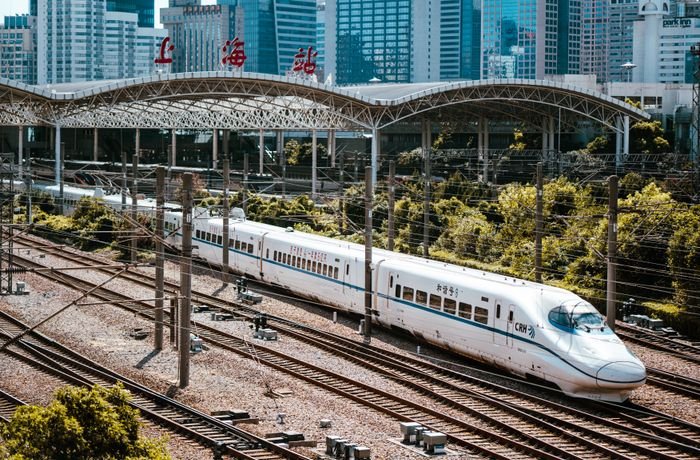
Chinese rail stations are closer to airports in scale than to European stations, and first-timers underestimate them. Beijing West and Shanghai Hongqiao have dozens of platforms across multiple levels. Here is the sequence that works.
- Enter through security. Bags go through an X-ray, you walk through a scanner, and your passport is checked. Allow 10 to 15 minutes at a busy station.
- Find your train on the departure board. Train number, destination, departure time, and waiting area. The gate is not published until 20 to 30 minutes before departure.
- Wait in the assigned hall. Each train has a designated zone. Do not wander to the platform early; the gate opens when the board says so.
- Scan in at the gate. Passport or QR e-ticket, then an escalator down to the platform. Your carriage number is marked on the ground; the train stops precisely on it.
- Board and stow. Large cases go on the rack at the end of the carriage, smaller bags overhead. The train leaves on the minute.
Do I need to print my ticket?
No. The QR e-ticket on your phone works at the gate, and the passport you booked with is the real key. Print a copy only if your phone battery is unreliable on travel days, and even then the passport alone is usually sufficient.
How much luggage can I bring?
There is no weighed allowance on high-speed trains — the rule is that luggage fits on the rack and you manage it yourself. One large case plus a daypack per person is fine. Lighters, most aerosols, and oversized lithium batteries are prohibited, and security enforces it.
12306 vs Platform vs Counter
| Method | Language | Passport booking | Best for |
|---|---|---|---|
| Official 12306 app | Chinese, with a limited English mode | Possible but fiddly | Residents with a Chinese phone and bank card |
| International booking platform | English | Automatic real-name entry | Visitors who want a chosen seat and an e-ticket |
| Station ticket counter | Limited English | Yes, with the passport | Last-minute travel, or a same-day change |
For most visitors the international platform is the lowest-stress route: it handles the real-name step, issues the QR code, and gives you English support if a train is delayed. The counter works in a pinch, but you queue, and seat choice is whatever is left.
Routes Worth Building a Trip Around
- Beijing–Xi’an: 4h20 to 4h50, second class around 515 CNY.
- Beijing–Shanghai: 4h18 on the fastest G-trains, up to 5h30 on cheaper departures; departures every 20 minutes at peak.
- Chengdu–Chongqing: 62 to 77 minutes between two food capitals, around 154 CNY.
- Guangzhou–Hong Kong West Kowloon: 47 to 58 minutes, with immigration at the destination station.
- Shanghai–Hangzhou: 45 to 60 minutes, the easiest day trip from Shanghai.
Pair each train with a room near the arrival station rather than the departure one — arriving at Xi’an North at 9 p.m. is not the moment to discover your hotel is 40 minutes across town. Our guide to budget hotels in China covers the districts that work, and China’s railway stations explains the layout of the big ones. If you want the on-board experience in more detail, see classes and seats on board.
Changing Plans, Missing Trains and Refunds
Chinese rail rules are more generous than most visitors expect, if you act before departure. A ticket can be changed once to another train, usually for a fee plus fare difference. Refunds before departure cost 5 percent of the fare more than 48 hours out, 10 percent between 24 and 48 hours, and 20 percent inside 24 hours. After the train leaves the ticket is worthless, which is why you should never plan a tight flight-to-train connection on separate tickets.
If you miss a train because a flight was late, a platform with English support is worth its small fee: you reach a person who can rebook instead of joining a station queue at 11 p.m. If your plans extend past the border, China’s international trains and land border crossings covers routes into Laos, Vietnam, Mongolia, and Russia. You can reserve a China train seat in English and have the e-ticket before you finish packing.
Frequently Asked Questions
Can foreigners book China high-speed trains online?
Yes. International platforms book with a foreign passport in English and issue a QR e-ticket, which avoids the Chinese-only parts of the official 12306 app. Have your passport details exactly as printed.
How far in advance do China train tickets go on sale?
Fifteen days before departure, including the departure date. If a site shows no availability three months out, the window simply has not opened. Holiday services sell out within hours of opening.
Which station should I choose in Beijing or Shanghai?
Beijing West for trains to Xi’an; Beijing South for Shanghai; Shanghai Hongqiao for most high-speed services. Check the station, not just the city — Beijing has five majors and they are far apart.
Is food available on board?
Yes, a trolley and a dining car on longer services, but the selection is limited and overpriced. Buy lunch at the station convenience store before boarding; it is cheaper and better.
What happens if I miss my train?
The ticket cannot be used on a later service without a change made before departure. Go to the ticket office immediately — staff can sometimes rebook you onto a later train the same day for a fee, subject to availability.