

Few dishes capture the spirit of Northwest China as completely as a steaming bowl of Lanzhou lamian noodles. Born on the banks of the Yellow River, this hand-pulled staple has traveled far beyond Gansu province, yet the bowls served in its home city remain in a class of their own. Whether you are a first-time visitor or a returning noodle devotee, understanding what goes into the bowl is the first step toward appreciating why locals queue at dawn for a seat.
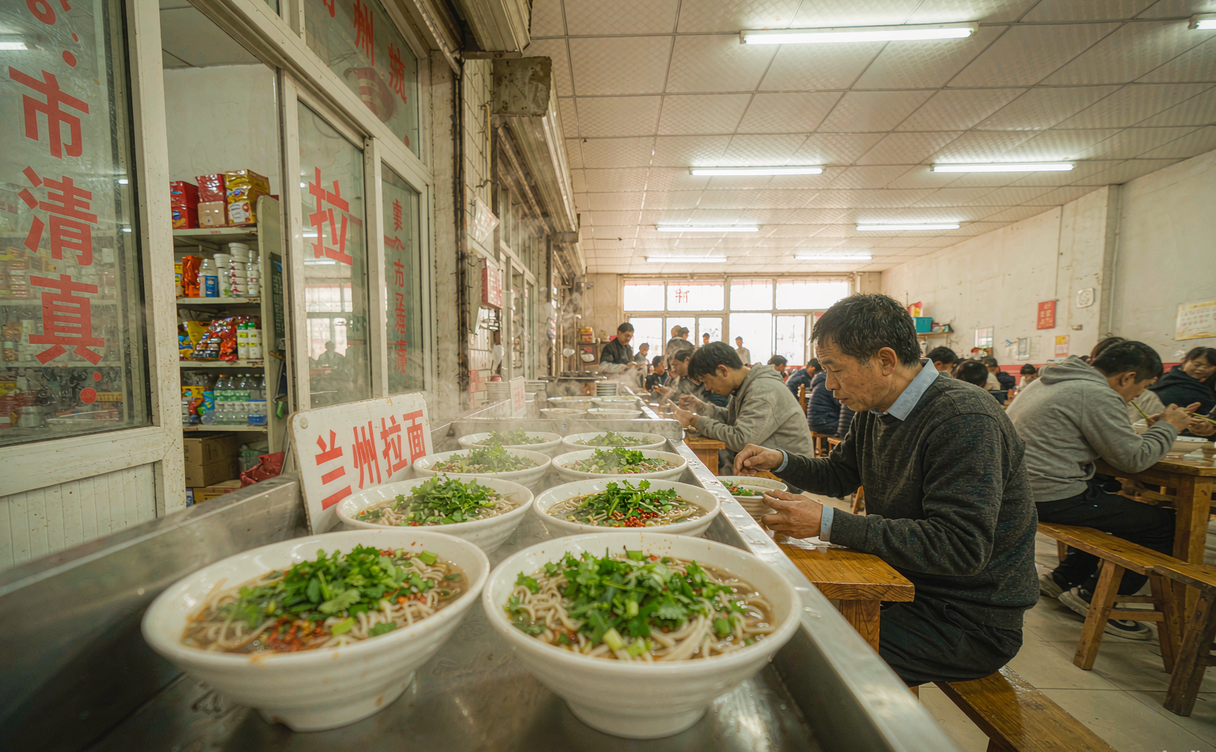
Lanzhou lamian noodles are deceptively simple: wheat flour, water, salt, and a little alkaline agent to give the dough its signature springy bite. From those humble ingredients comes a dish defined by texture, clarity, and balance. A proper bowl layers chewy hand-pulled noodles in a clear beef broth, topped with tender slices of braised beef, a spoonful of bright red chili oil, fresh cilantro, and a handful of garlic chives. The result is at once comforting and complex, and it explains why the city treats its noodle culture as a point of pride.
What Makes Lanzhou Beef Noodles Distinct
To understand what makes Lanzhou beef noodles different, you have to look at the broth. The soup is built slowly from beef bones, oxtail, and a small bundle of aromatics, simmered for hours until it turns a pale, almost translucent gold. This is not a heavy, murky stock; it is clean, savory, and light enough to drink on its own. The beef itself is usually braised separately, then sliced thin so each mouthful melts against the noodles.
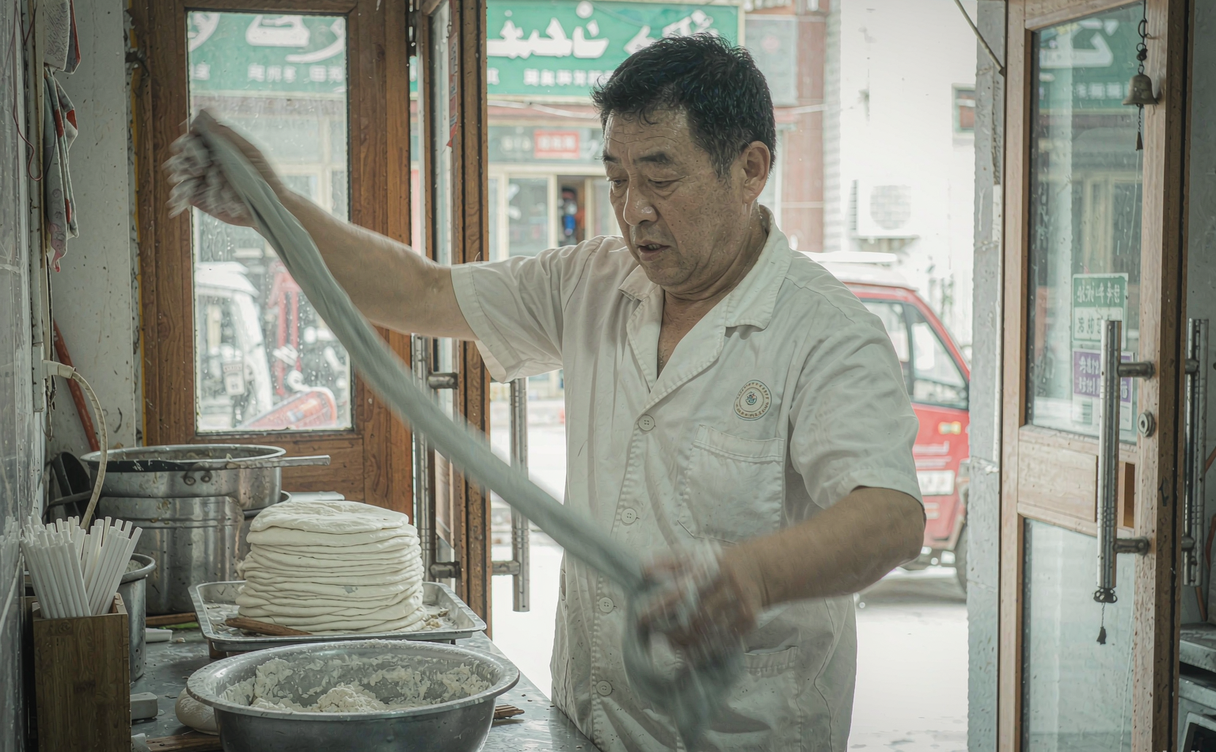
Another defining feature is customization. When you order, the cook asks how you want your noodles cut. The same dough can become wide ribbons, round threads, or anything in between, with names that describe both width and shape. Regulars know their preference by heart, and watching a cook transform a single lump of dough into a precise width is part of the show. This level of personalization is rare in fast casual dining and is central to the culture of the dish.
For travelers building a broader food plan, our Gansu cuisine guide covers the regional companions that pair beautifully with a noodle breakfast, from lamb skewers to milky teas.
The Craft Behind Authentic Lanzhou Lamian Broth
The soul of the bowl is the soup, and achieving authentic Lanzhou lamian broth is a discipline in patience. Traditional shops start before sunrise, boiling bones and adding precise amounts of salt, huangjiang (a fermented sauce), and sometimes a touch of star anise or ginger. The goal is a broth that is intensely beefy without a hint of grease or cloudiness.
Many visitors are surprised to learn that the chili oil served alongside is not meant to make the soup spicy in the Western sense. Instead, it contributes color, aroma, and a gentle warmth. The red oil floats on top, staining the surface a tempting orange, while the broth beneath stays clear. Getting this balance right is why the best shops guard their recipes and train apprentices for months before letting them near the pot.
Water quality also matters more than outsiders expect. Lanzhou sits on the Yellow River, and long-standing shops insist that local water gives the dough and broth a character impossible to replicate elsewhere. Whether or not that is true, the devotion to process is genuine, and it shows in the final bowl.
If you plan to explore the wider region, the Qinghai-Gansu loop itinerary threads together the cities and landscapes where this noodle tradition thrives.
Lanzhou Noodle vs Ramen Difference
Travelers from Japan or the West often ask about the Lanzhou noodle vs ramen difference, and the comparison is worth unpacking. Both are wheat noodles served in broth with toppings, but the similarities mostly end there.
Ramen noodles are made with alkali water (kansui) and are typically machine-cut or extruded, then boiled. Lanzhou noodles are pulled entirely by hand, a live performance in which the cook swings and stretches the dough into strands. The texture is different too: ramen tends to be springy and slightly firm, while lamian is elastic, chewy, and variable in width from order to order.
The broths diverge as well. Ramen broth is often rich and opaque, built from pork, chicken, or a combination, sometimes emulsified with fat. Lanzhou broth aims for clarity and a lighter beef note. Toppings follow different logics: ramen leans toward soft-boiled egg, nori, and menma, whereas lamian keeps it minimal with beef, chives, cilantro, and chili oil. Knowing the Lanzhou noodle vs ramen difference helps you appreciate each bowl for what it is rather than measuring one against the other.
For a deeper look at the dish itself, see our dedicated Lanzhou beef noodle guide, which breaks down ordering etiquette and regional variations.
Where to Eat Noodles in Lanzhou
Knowing where to eat noodles in Lanzhou can feel overwhelming because the city is dense with options, from humble street corners to polished chains. The good news is that quality is high almost everywhere; the question is less about avoiding bad bowls and more about finding the atmosphere you want.
Early morning is the golden hour. Many shops open around six and sell out by mid-morning, because locals treat lamian as a breakfast or late-morning meal. Arriving before nine lets you watch the full pulling performance and guarantees the freshest broth. Look for shops with a visible pulling station, a steady stream of regulars, and stacks of empty bowls near the door.
Riverside areas near the Yellow River offer scenic spots where you can pair a bowl with a walk along the water. University districts tend to have cheaper, student-friendly portions, while the older neighborhoods close to the mosque district serve some of the most traditional halal preparations in the city.
Best Lanzhou Lamian Restaurant Choices
Pinpointing the single best Lanzhou lamian restaurant is a friendly local debate, but a few consistent standouts appear in conversations with residents. The famous chain with locations across China originated here, and its home-city branches are said to keep tighter standards. Beyond the well-known name, smaller family shops often win on broth depth and noodle freshness.
When judging a shop, watch the broth pot and the pulling hand. A clean, pale soup and a cook who pulls with rhythm usually signal a satisfying bowl. Do not be shy about asking for a specific width; staff expect it. If you enjoy a thicker noodle, request the wide ribbon cut, and if you prefer something delicate, ask for the thin thread.
Price is refreshingly low. A generous bowl rarely costs more than a few dollars, making it easy to sample several shops across a short trip. For travelers who want structure, joining a guided food walk or pairing noodles with nearby sights such as those in our Kongtong Mountain Gansu guide can round out a day of eating and exploring.
Halal Noodle Shops Lanzhou and Local Etiquette
Because the dish developed within the Hui Muslim community, halal noodle shops Lanzhou are the norm rather than the exception. Pork is absent, and beef and lamb dominate the menu. Visitors should respect local customs: avoid bringing outside meat, and note that many shops observe prayer times, which can briefly slow service.
The halal identity also shapes the flavor profile. The use of cumin, Sichuan pepper, and clear beef fat gives the broth a clean, aromatic character distinct from pork-based soups elsewhere in China. This is part of what makes the dish feel both regional and rooted in a specific cultural tradition.
Etiquette at the counter is straightforward. Order, pay, and receive a token or number; when your bowl is ready, noodles are often placed in front of you within minutes. Slurping is welcome and even expected, as it cools the noodles and lifts the aroma. Finish with the broth if you like, or leave a little as locals do.
For those extending their journey into neighboring provinces, our Qinghai cuisine guide explores the shared noodle heritage and lamb-forward cooking that links the two regions.
Planning Your Noodle Trip
Timing your visit can elevate the experience. Spring and autumn bring comfortable temperatures ideal for walking between shops, while winter turns a hot bowl into pure comfort. The city is well connected by rail and air, making it an easy stop on a Northwest China route.
Beyond noodles, Lanzhou offers riverfront parks, museums, and gateway access to the Silk Road landscapes that surround it. Pairing a morning of lamian with an afternoon of sightseeing creates the kind of slow, sensory travel that lingers in memory. If you are mapping a larger regional adventure, the Hainan Qinghai travel guide can help you connect plateau scenery with the food trails of Gansu.
The history of these noodles is documented in detail on the Lanzhou lamian Wikipedia page, which traces the dish from its Hui Muslim origins to its status as a global street food.
Whether you chase the best Lanzhou lamian restaurant or simply follow your nose to the nearest steaming bowl, the city rewards curiosity. Master the broth, respect the craft, and you will leave with both a full stomach and a deeper feel for Northwest China.
Craving more Northwest China flavors? Read our Gansu cuisine guide.
Planning a regional road trip? Our Qinghai-Gansu loop itinerary maps the best stops for noodle lovers.
Want the full breakdown of broth, toppings, and ordering? See our Lanzhou beef noodle guide.