

The first time I climbed the stone path up Mount Gephel, I heard the monastery before I saw it — a low murmur of chanting drifting down the slope, punctuated by the clack of wooden prayer beads. Drepung Monastery, on the northern edge of Lhasa, Tibet, China, was once the largest monastery on earth, home to more than ten thousand monks at its peak. Standing in its upper courtyards, with whitewashed walls spilling down the hillside like a frozen waterfall, I finally understood why travelers call it the roof of the Tibetan Buddhist world.
I spent a full morning here on my last trip to Tibet, China, and I want to walk you through exactly what I saw, how to get there without the usual headaches, and how to fit Drepung into a wider Lhasa itinerary.
Getting There
Drepung sits about 8 kilometres west of central Lhasa, Tibet, China, at the foot of Mount Gephel. I took a taxi from the old town — a 25-minute ride that cost roughly 30 RMB and saved me the hassle of deciphering local bus routes. If you prefer public transport, bus 24 runs from the city to the lower parking area, but the final climb is on foot either way.
A practical tip from experience: arrive before 9 a.m. The light is soft, the tour groups have not yet arrived, and you can hear the monks’ morning prayers echoing through the assembly halls. Lhasa sits at 3,650 metres, and Drepung is a little higher still, so take the altitude slowly — I paused twice on the climb and was glad of it.
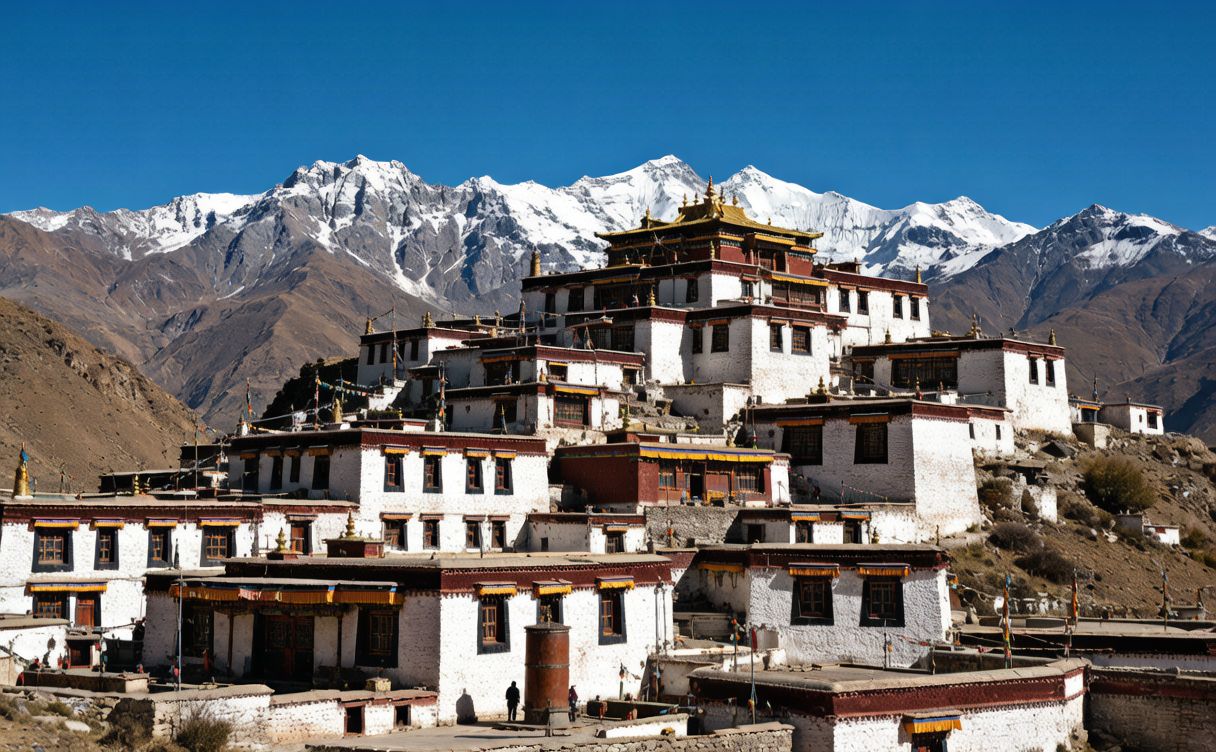
Most visitors pair Drepung with the nearby Sera Monastery for its afternoon debates, but I found Drepung quieter and more atmospheric. If you are building a Tibet, China plan, our Lhasa travel guide lays out the logical loop between the two.
What to See
Drepung is huge, and the layout can confuse first-timers. The site is split into several colleges (dratsang) and a warren of winding alleys. I focused on three things.
The Great Assembly Hall (Coqen) is the heart of the monastery. Inside, dozens of butter lamps flicker before a towering gilded Maitreya statue, and the throaty rhythm of monks chanting from worn texts fills the air. Photography is forbidden inside, which I found oddly liberating — I just sat and listened for twenty minutes.
The Ganden Palace, once the residence of the Dalai Lamas before the Potala, sits at the top of the complex. The walk up rewards you with a sweeping view over the whole valley. I came here at golden hour and watched the light turn the hills copper.
The back hills and hermitage trail are where Drepung truly shines. A path leads up past small retreat caves and mani walls, almost empty of visitors. I met an old monk polishing a prayer wheel who motioned me to sit; we shared silence and a thermos of butter tea.
Monastic Life
What moved me most was not the architecture but the ordinary rhythm of monastic life. At its height, Drepung housed over 10,000 monks; today a few hundred remain, but the routines are unchanged. I watched young novices sweep the flagstones with bundled twigs, and elders painstakingly copying scriptures with a thin bamboo pen.
If you visit in late summer, you may catch the Shoton Festival, when a giant thangka — a scroll painting dozens of metres tall — is unveiled on the hillside at first light. I missed it by a week and still regret it; locals told me the crowd falls silent as the cloth drops. Time your trip around it if you can.
A word on respect: circle stupas and mani walls clockwise, keep your voice low in the halls, and always ask before photographing a monk. The hospitality here is quiet but real.
Tips
A few things I learned so you do not repeat my small mistakes:
- Altitude first. Spend a day or two acclimatising in Lhasa before climbing. The thin air at Drepung is no joke.
- Dress modestly. Cover shoulders and knees; carry a scarf for the chilly upper courtyards.
- Bring small cash. There is a modest entrance fee, and the on-site tea stalls take cash more readily than cards.
- Go early, stay loose. Give yourself three unhurried hours. Rushing Drepung wastes the best part — the silence.
- Hire a guide at the gate. For about 100 RMB I got a local who explained the symbolism of each hall; it transformed the visit.
- Sun protection. At this elevation the UV is fierce even on cool days. Hat and SPF 50 are essential.
Best Time
The short answer: May through October, when Lhasa is mild and the roads are clear. Summer (July–August) brings the warmest weather and the Shoton Festival, but also the biggest crowds. I prefer late September, when the light is photographic and the tourist numbers thin out.
Avoid deep winter (December–February) unless you love biting cold and near-empty sites — the hills can be snowbound and some facilities close. Spring is a gamble: blossom one week, sand-laden wind the next.
Good to Know
Drepung is part of a much larger Tibet, China story, and I strongly suggest linking it with the city’s other icons rather than treating it as a one-off. The Potala Palace guide and the nearby Jokhang Temple complete the sacred triangle of Lhasa. For sacred lakes beyond the city, see our Namtso Lake guide and the Basum Tso guide — both make rewarding day trips from Lhasa, Tibet, China.
For official opening hours, ticket prices, and seasonal alerts, check the Tibet Culture and Tourism Department: Tibet Culture and Tourism. I always confirm gate times the day before I travel, because mountain weather in Tibet, China closes passes without much warning.
Drepung Monastery, Tibet, China is not the easiest place to reach, but that is exactly why it stays so honest and profound. Go for the chanting, stay for the silence on the back hill, and leave with a quieter mind than you arrived with.